7 Fitness Trends Changing What People Ask Their Coach in 2026
People aren't just asking how to lose weight anymore. Here are the seven questions reshaping coaching in 2026, with short answers, the research, and what we actually do about them.
Ten years ago, most people walked into our gym with one of three goals: lose weight, get stronger, or get in shape for something. Those goals haven't gone anywhere. But the questions people ask once they're on the floor have changed a lot.
Now we hear things like: "How should I train in my fifties?" "Is it okay to come in when I've slept four hours?" "Can this help my anxiety?" "Am I too old for HYROX?" "Will I fit in here?"
Those are better questions. They're also harder ones, and a generic workout from an app or a search engine can't answer them. Below are the seven trends we see shaping what people ask their coach in 2026, what the evidence actually says, and how we handle each one at CrossFit BC in Vancouver.
The 7 fitness trends at a glance
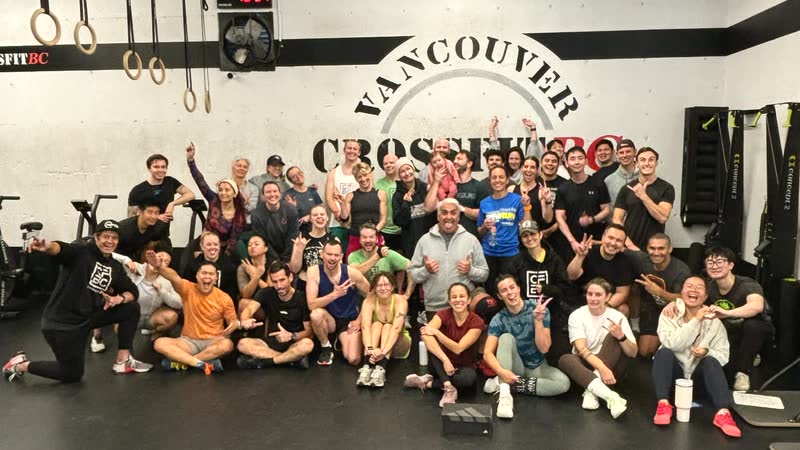
| Trend | The question people ask | The short answer |
|---|---|---|
| 1. Recovery is part of the plan | "How do I keep progressing without burning out?" | Plan easier weeks, track sleep and stress, and treat recovery as training. |
| 2. Individual over one-size-fits-all | "What will actually work for my life?" | The best program is the one you can repeat. Scale the plan to the person. |
| 3. Strength after 40, 50 and 60+ | "How should I train as I get older?" | Keep lifting. Adjust volume and recovery, not ambition. |
| 4. Movement for mental health | "Can exercise help me feel better?" | Yes, the evidence is strong. Coaches support it; they don't replace professional care. |
| 5. Hormones and life stages | "Are my hormones affecting my training?" | Possibly. Track how you respond, adjust, and see a doctor for new or lasting symptoms. |
| 6. Belonging and inclusion | "Will this work for someone like me?" | A good gym adapts the program to you, not the other way around. |
| 7. Hybrid goals like HYROX | "Can I train for an event without losing strength?" | Yes. Blend strength and engine work on purpose. |
1. Recovery is becoming part of the program, not a break from it
The question: "How do I keep getting better without running myself into the ground?"
The short answer: Progress comes from training plus recovery. Planned lighter weeks, decent sleep and paying attention to stress let you keep training hard for years instead of weeks.
People are busier and more stressed than ever, and many have learned the hard way that "more" stops working. The adaptation you want happens after the workout, while you recover. Pile on fatigue for long enough and it starts hiding the fitness you've built.
How we handle it: We build a planned deload between every training block. If you want the full reasoning, read why we deload. Coaches also ask the boring but useful questions before class: how did you sleep, how's your energy, anything sore? A rough night doesn't mean you skip. It might mean you lift at a lighter percentage and leave a rep or two in the tank.
Try this: Rate your sleep, stress and soreness from 1 to 5 before you train. If two of the three are low, keep the session but turn the intensity down.
2. Sustainable, individual programming is replacing one-size-fits-all plans
The question: "What will actually work for my body, my goals and my life?"
The short answer: The program you can stick with beats the perfect program you quit in week three. Start with your schedule, history and limits, then progress from there.
Anyone can download a 12-week plan. Very few finish one. What people want now is a plan that fits around kids, shift work, an old knee and a job that travels.
How we handle it: Everyone in a class does the same workout, scaled to them. Loads, movements and volume change person to person, so the beginner and the long-time member both get the right dose. New members start with Foundations so a coach learns how they move, what they've done before and what they're working around before they join a group class.
Try this: Pick a weekly training number you'd hit even in a bad week. That's your floor. Build up from it.
3. People over 40 want strength and longevity, not a story about decline
The question: "How should I train differently as I get older?"
The short answer: Keep lifting. Strength training is one of the best things you can do as you age. What changes is how much volume you handle and how much recovery you need, not whether you should train hard.
Canada's 24-Hour Movement Guidelines recommend muscle-strengthening activities at least twice a week for adults, including older adults, plus activities that challenge balance for adults 65 and up. Research on resistance training in older adults links it to better strength, function and metabolic health. The message has shifted from "slow down" to "train smart."
How we handle it: Our Living Legends program is for adults 60+, with strength, balance and mobility built in and coaches who scale every movement. Plenty of members in their forties and fifties train in regular classes too, and we adjust load and recovery for them, not their goals.
Norm S., 71, a HYROX racer and Living Legend, put it better than we could in a recent Google review: "I am a 71 year old active senior who decided to do HYROX and so needed some training. I eventually found CrossFit BC and I can honestly say it has been an outstanding experience."
Try this: If you're over 40 and new to lifting, start with two strength sessions a week and give yourself at least one full day between them.
4. Mental health and connection are driving why people move
The question: "Can exercise help me manage stress, feel better or feel less alone?"
The short answer: Yes. Large research reviews show physical activity meaningfully reduces symptoms of depression and anxiety. A gym can also give you structure, small wins and people who notice when you're not there.
A 2023 umbrella review in the British Journal of Sports Medicine found physical activity was effective for improving symptoms of depression, anxiety and psychological distress across many adult populations. A 2024 review in The BMJ found walking, jogging, yoga and strength training were all helpful for depression. For a lot of people, the hour in the gym is the one part of the day nobody else gets.
How we handle it: Coaches learn names, say hello and notice when someone goes quiet. We keep the language welcoming, give options instead of orders, and never promise that a workout will fix a mental health condition. Exercise is a support, not a substitute. When someone needs more than a coach can offer, we encourage them to talk to their doctor or a mental health professional.
Try this: Pick class times where you'll see the same faces. Consistency gets easier when people expect you.
5. People want real answers about hormones, health and performance
The question: "Could hormonal changes be affecting my energy, mood or results?"
The short answer: Maybe. Perimenopause, menopause, falling testosterone and postpartum can all change how you feel and recover. Track your patterns, adjust training to how you respond, and see a doctor for symptoms that are new, persistent or worrying.
This is the topic with the most noise online. Social media is full of hormone "hacks" that oversimplify complicated biology. A coach's job is not to diagnose or prescribe. It is to listen, take you seriously and adjust the plan.
How we handle it: We track what we can see: energy, recovery, performance and how sessions feel. On rough days we offer options rather than pushing through. If you're pregnant or postpartum, check with your care provider and we'll adapt your training. Read our health notice before you start if you have any medical concerns.
Try this: Keep a simple log for a month: energy, sleep and how your workout felt. Bring it to your coach and your doctor. Patterns beat guesses.
6. Inclusive, life-stage coaching is now the baseline
The question: "Will this space and this program work for someone like me?"
The short answer: It should. A good gym adapts the program to the person, whatever their age, size, background, ability or experience. If you feel like you have to earn your place, keep looking.
Many people put off joining a gym because they think they need to get fit first. That fear shows up in almost every first conversation we have.
How we handle it: We've coached Vancouver since 2008, and walking in for the first time is always the hardest part. Every movement has a scaled version. Nobody is expected to know the jargon. You can book a free class and see for yourself before you commit to anything.
Try this: Before joining any gym, ask: "What happens if I can't do a movement in the workout?" The answer tells you a lot.
7. Hybrid goals like HYROX are changing what people train for
The question: "Can I train for an event without losing strength or getting hurt?"
The short answer: Yes. Hybrid events reward both strength and endurance, so the best preparation blends them on purpose instead of piling running on top of everything else.
Fitness racing has grown fast. People who never imagined entering a race now have a date on the calendar, and that gives training a clear purpose. The risk is doing too much too soon.
How we handle it: Our HYROX program balances engine work, station practice and strength, and the same recovery principles from trend 1 apply. If you're curious but not ready to race, Cardio Club is a free, easy way to start building your engine.
Try this: If you add running for an event, cut some other conditioning to make room. Add, don't stack.
What this means if you're choosing a gym in Vancouver
Taken together, these trends point in one direction: people want coaching that sees the whole person. Look for a gym that asks about your sleep and your history, scales without making you feel singled out, plans easier weeks on purpose, and is honest about what a coach can and can't help with.
That's the kind of coaching we've tried to do since 2008. If you want to see what it feels like, book a free class and tell your coach what you're working toward.
References
- Ross R, Chaput JP, Giangregorio LM, et al. (2020). Canadian 24-Hour Movement Guidelines for Adults aged 18-64 years and Adults aged 65 years or older. Applied Physiology, Nutrition, and Metabolism. https://doi.org/10.1139/apnm-2020-0467
- Westcott WL. (2012). Resistance training is medicine: effects of strength training on health. Current Sports Medicine Reports. https://doi.org/10.1249/JSR.0b013e31825dabb8
- Singh B, Olds T, Curtis R, et al. (2023). Effectiveness of physical activity interventions for improving depression, anxiety and distress: an overview of systematic reviews. British Journal of Sports Medicine. https://doi.org/10.1136/bjsports-2022-106195
- Noetel M, Sanders T, Gallardo-Gómez D, et al. (2024). Effect of exercise for depression: systematic review and network meta-analysis of randomised controlled trials. The BMJ. https://doi.org/10.1136/bmj-2023-075847
- Mottola MF, Davenport MH, Ruchat SM, et al. (2018). 2019 Canadian guideline for physical activity throughout pregnancy. British Journal of Sports Medicine. https://doi.org/10.1136/bjsports-2018-100056