
12 Free Training Tools to Make You a Smarter Athlete
No logins, no downloads, no subscriptions. We built 12 free calculators and coaching tools designed for the way people actually train. Here is how to use every single one.
Here's a scenario we see all the time on the coaching floor: someone finishes a strength session, looks at the whiteboard for tomorrow's workout, and asks, "What should I load for 75% of my back squat?" Then they pull out their phone, open a notes app, squint at a number they wrote down three months ago, and start doing math in their head.
We figured there had to be a better way. So we built it.
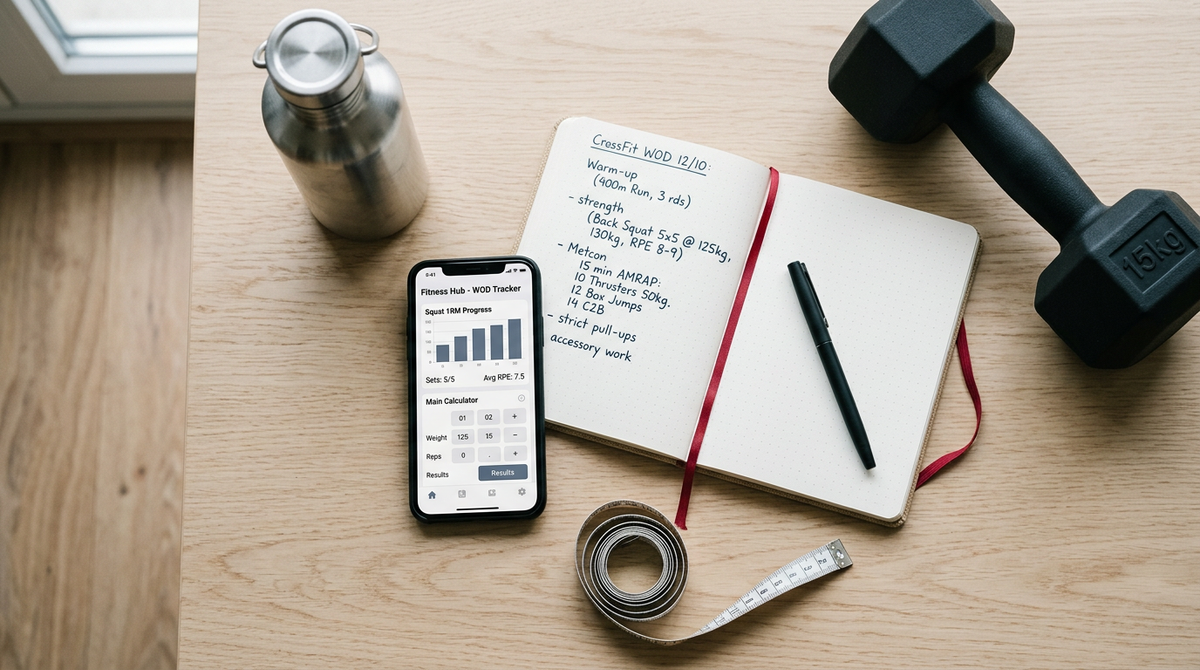
Over the past year, our coaching team has developed a full suite of free digital training tools designed for the way people actually train. No logins. No downloads. No subscriptions. Just open your phone, punch in your numbers, and get what you need. Every tool works on mobile, loads instantly, and was designed by coaches who use them daily.
Here's a deep dive into each one, why we built it, and how to get the most out of it.
Load Percentage Calculator
This is the one that started it all. Enter your one-rep max for any lift and the calculator instantly shows you what to load at every percentage from 50% to 100%. No mental math, no rounding errors.
How to use it: Let's say your back squat max is 225 lbs. You open the tool, type in 225, and immediately see that 75% is 169 lbs, 80% is 180 lbs, and 85% is 191 lbs. Done. Takes two seconds.
Why we love it: On the coaching floor, we watch athletes waste valuable warm-up time doing percentage math on their phones. This tool eliminates that friction entirely. It also helps newer athletes understand the relationship between percentages and intensity, which is a concept that takes time to internalize.
Pro tip: Bookmark this on your phone's home screen. When the whiteboard says "5x3 at 80%," you'll have your number before you even reach the barbell.
Rep Max Estimator
Not everyone tests their one-rep max regularly, and honestly, they shouldn't have to. This tool estimates your 1RM based on any set you've completed. Hit 5 reps at 185 lbs? The estimator calculates your projected max using established strength formulas.
How to use it: Enter the weight you lifted and the number of reps you completed. The tool uses multiple proven formulas (Brzycki, Epley, and others) and gives you a projected max. It works best with sets of 10 reps or fewer, where the estimates are most accurate.
Why we love it: This is especially valuable during our Foundations program. New athletes don't have established maxes yet, but they might know they can deadlift 135 lbs for 8 reps. That gives us a working number to program from. It also helps experienced lifters track progress without the physical and mental toll of maxing out every cycle.
Coach tip: If you hit a clean set of 3 at a given weight, your estimated 1RM is typically about 10% higher than that weight. This tool confirms that math and removes the guesswork.
Plate Loading Calculator
You know the target weight. Now, what plates go on each side? This tool accounts for the barbell weight (men's 45 lb, women's 35 lb, or training bar) and tells you exactly which plates to load on each side.
How to use it: Select your bar type, enter your target weight, and the tool shows the plate breakdown per side. It uses standard plate sizes (45, 35, 25, 15, 10, 5, 2.5 lbs) and works in both pounds and kilograms.
Why we love it: This might sound simple, but it saves real time, especially when you're doing a workout with multiple barbell weights and need to change plates quickly. We see athletes get tripped up on this more than you'd think, particularly when converting between kilograms and pounds on competition barbells.
Fan favorite moment: One of our members told us she screenshots the plate breakdown for her entire week's programming on Sunday nights. That kind of prep is next-level, and this tool makes it effortless.
Workout Timer
AMRAPs, EMOMs, Tabatas, For Time workouts, and custom intervals, all in one timer with audio cues and a fullscreen mode that's visible from across the gym.
How to use it: Choose your workout format, set your intervals, and hit start. The timer handles countdowns, round tracking, and audio alerts. Fullscreen mode turns your phone or tablet into a gym clock.
Why we love it: This is the tool our members use most for home workouts, hotel workouts, and open gym sessions. When there's no coach running the clock, this timer steps in. The audio cues are a game-changer because you can focus on the work instead of watching a screen.
Pro tip: Use Tabata mode (20 seconds work / 10 seconds rest) for quick conditioning finishers. Eight rounds takes exactly four minutes and will humble you in the best way.
Recovery Check-In
This one is different from the others. Instead of calculating numbers, it asks you to rate five factors: sleep quality, muscle soreness, energy level, stress, and motivation. Based on your answers, it gives you a training recommendation for the day.
How to use it: Slide each factor on a simple scale, and the tool scores your readiness. A high score means you're good to push. A lower score might suggest dialing back intensity, focusing on mobility, or taking an active recovery day.
Why we love it: This is the tool we wish every athlete would use before walking through the door. Recovery is where progress happens, and most people either ignore recovery signals entirely or overcorrect by skipping workouts when they just need to modify. The check-in creates a quick moment of self-awareness.
Real talk: If your score is low three days in a row, that's your body telling you something. Listen to it. Talk to your coach. We'd rather adjust your week than watch you grind into the ground.
Workout Split Planner
Planning your pacing for a workout is one of the most underused strategies in functional fitness. This tool helps you map out your round times for AMRAPs, EMOMs, and For Time workouts so you go in with a plan instead of just sending it.
How to use it: Enter the workout format and your target pace per round. The planner maps out your entire session, showing you where you should be at each checkpoint. For AMRAPs, it estimates total rounds. For EMOMs, it tracks work-to-rest ratios.
Why we love it: Athletes who pace well consistently outperform athletes who start too hot and fade. This is true at every level, from your first week to competition. Having a plan transforms how you approach a workout.
Coach insight: We use this approach with our HYROX athletes all the time. Knowing your target split for each station and run segment is what separates a smart race from a suffer-fest.
HYROX Time Predictor
Planning to race HYROX? This tool estimates your total race time based on your running pace and station performance times. It breaks down the entire race so you can see where your strengths are and where to focus your training.
How to use it: Enter your 1 km run pace and estimated times for each of the eight HYROX stations (SkiErg, sled push, sled pull, burpee broad jumps, rowing, farmers carry, sandbag lunges, and wall balls). The predictor totals everything up, including transitions, and gives you a projected finish time.
Why we love it: HYROX is a race of pacing and preparation. This tool helps athletes set realistic goals and identify weaknesses. If your sled push time is dragging your total up, that tells you exactly where to spend your training energy. We use this with every athlete in our HYROX Race Ready program.
Pro tip: Run the predictor before and after a training cycle to see your projected improvement. Watching that number drop is incredibly motivating.
Protein and Macro Calculator
How much protein do you actually need? This calculator estimates your daily protein target and rough macro breakdown based on your body weight, activity level, and goals. It's not a meal plan. It's a starting point for better nutritional awareness.
How to use it: Enter your weight, select your activity level, and choose your primary goal (fat loss, maintenance, or muscle gain). The tool gives you a daily protein target in grams plus a suggested macro split.
Why we love it: Nutrition conversations can get complicated fast, and most people just need a simple anchor to start from. "Am I eating enough protein?" is the most common nutrition question we hear, and this tool answers it in ten seconds. From there, our coaches can help fine-tune things based on individual needs.
Good to know: Most active adults training three to five days per week need more protein than they think. The general guideline of 0.7 to 1.0 grams per pound of body weight surprises a lot of people.
Pace Calculator
Whether you're training for HYROX, running a 5K, or just trying to nail your 1 km splits, this calculator converts between pace (min/km or min/mile), speed, and finish times.
How to use it: Enter any one value (pace, speed, or target finish time for a given distance) and the calculator fills in the rest. It works in both metric and imperial.
Why we love it: Running is a huge part of HYROX and general fitness, but most people don't know their actual running pace. This tool makes it concrete. If you want to finish a HYROX race in under 75 minutes, you need specific run splits. This calculator gives you that number to train toward.
BMR and Daily Energy Calculator
Your Basal Metabolic Rate is how many calories your body burns at complete rest. This calculator estimates your BMR and then adjusts for your activity level to give you an estimated Total Daily Energy Expenditure (TDEE).
How to use it: Enter your age, height, weight, and biological sex. Select your activity level, and the tool estimates both your BMR and daily calorie needs. It uses the Mifflin-St Jeor equation, which is considered the most reliable for most adults.
Why we love it: This is a reality check tool. Many athletes are either dramatically undereating for their activity level or have no idea how many calories they actually need. Having a baseline number, even an estimate, helps frame better decisions around fueling.
Important note: These numbers are estimates. They're a starting point, not gospel. Individual metabolism varies, and factors like sleep, stress, and body composition all play a role. If you want something more personalized, our Performance Lab offers DEXA scans and RMR testing for precise data.
Lb / Kg Converter
Simple, fast, two-way conversion between pounds and kilograms. That's it. That's the tool.
Why we love it: Competition barbells are in kilograms. Most North American gyms program in pounds. HYROX uses kilos for some stations and pounds for others. This converter eliminates confusion instantly. Type in a number, get the conversion, move on with your life.
When you'll need it: Traveling to train at a gym that uses different units. Following a European-based program. Watching competition footage and wondering what the athletes are actually lifting. It comes up more than you'd expect.
How We Built These (and Why They're Free)
Every one of these tools exists because of a real conversation that happened at the gym. A member asked a question, a coach gave an answer, and then someone said, "We should just build a thing for that."
We could have pointed people toward existing apps. There are plenty of fitness calculators on the internet. But most of them are bloated with ads, require account creation, or bury the actual tool under five screens of content. We wanted something that loads fast, works on any phone, and gets out of your way.
They're free because we believe tools that help people train better should be accessible to everyone, not just our members. If you never set foot in our gym but these calculators help you train smarter, that's a win.
Using These Tools Together
Here's a quick example of how these tools stack in practice:
- Morning: Do a Recovery Check-In. Score is 7/10, green light for a solid training day.
- Pre-workout: Check the whiteboard. It says "5x3 Back Squat at 82%." Open the Load Percentage Calculator, enter your max, get your number.
- Loading the bar: Open the Plate Calculator to see what goes on each side.
- Conditioning piece: It's a 12-min AMRAP. Use the Workout Split Planner to map your target pace per round.
- Post-workout: Wondering if you're eating enough to support this training? Run the Protein Calculator for a quick gut check.
Five tools, five minutes of planning, and you walked into that session with a real plan instead of winging it.
What's Coming Next
We're always building. If there's a tool you wish existed, something that would save you time or help you train better, tell your coach or drop us a message. Every tool we've built started as a conversation, and the best ideas come from the people actually doing the work.
In the meantime, bookmark the Training Tools page and put it to use. Your future self (the one who doesn't have to do mental math at 6 AM) will thank you.