
Why We Deload: The Lighter Week That Makes You Stronger
Lighter weeks make you stronger. Here's what a deload is, what the research says, and why CrossFit BC builds one between every training block.
You walk in on Monday, look at the whiteboard, and something feels off. The weights are lighter. There are fewer rounds. The conditioning piece is shorter than your warm-up playlist.
Somebody at the chalk bucket says it out loud: "That's it?"
Yep. That's it. And it might be the most important week we program all year.
Welcome to deload week. Let's talk about why it exists, why we build one in between every training block at CrossFit BC, and how to get the most out of it. (Spoiler: it involves showing up.)
So what is a deload, exactly?
A deload is a planned week where we turn the training dial down. Same classes, same coaches, same crew. Less total work.
Usually that means some mix of lighter loads, fewer sets and reps, shorter or easier conditioning, and more time on skill, positions and mobility. You'll still move. You'll probably still sweat. You just won't be lying on the floor afterwards making snow angels in the chalk.
The key word is planned. We schedule it on purpose, before you need it. A week off because you're sick, wrecked or your back is grumpy is a different animal. That's your body forcing a deload on you, and it has terrible timing.
Why lighter weeks make you stronger
You get fitter while you recover
Here's the part most people miss. The workout is the stimulus. The adaptation happens afterwards, while you recover.
Every hard session is a stress. Your body responds by repairing and rebuilding so the same effort costs you a little less next time. Stack enough of those cycles and you get stronger, faster and more capable.
The catch is that fatigue stacks too. Week over week, a little leftover tiredness builds up in your muscles, joints, nervous system and head. For a while you can push through it. Eventually it starts hiding the fitness you've actually built.
Think of it like training with a backpack full of rocks. You're fitter than you were six weeks ago, but you can't show it because you're hauling all that fatigue into every workout. A deload takes the backpack off. The fitness stays. The fatigue drops. That's a big reason people so often feel springy and hit numbers in the week or two after one.
Your tendons are slower than your muscles
Muscle adapts fairly quickly. Tendons, ligaments and cartilage take their sweet time. They get less blood flow and they remodel more slowly.
That gap matters. Your engine and your muscles can be ready for more load and volume before your connective tissue is. Live in that gap too long and you get the classic nagging stuff: the cranky elbow, the achy knee, the shoulder that clicks on the way up.
A planned lighter week lets the slow tissues catch up. We'd much rather you take an easy week on our terms than six weeks off on an injury's terms.
Stress is stress
Your training doesn't happen in a bubble. You've got deadlines, kids, a commute, short nights and November in Vancouver.
All of it draws from the same recovery bank account. Your body doesn't keep a separate ledger for burpees and for a rough week at the office.
Most of our members aren't full-time athletes. They're nurses, teachers, tradespeople, parents, business owners and grandparents. A deload is built-in breathing room for real life.
Your head needs it too
Grinding hard every single week wears down motivation. Workouts start to feel like chores and the whiteboard starts to feel like a threat.
A lighter week resets that. You roll into the next block curious and hungry instead of flat and dreading Monday.
What does the science say?
Fair question, and we want to be straight with you.
Deloading is one of the most common tools in strength and conditioning, and the research is still catching up to the practice. When researchers interviewed experienced weightlifting, powerlifting and bodybuilding coaches, most described deloads of 5 to 7 days, usually programmed every 4 to 6 weeks (Bell et al., 2022).
A 2024 survey of 246 competitive strength and physique athletes landed in the same place. Their deloads lasted about 6 days, came roughly every 5 to 6 weeks, and were mostly planned ahead. They cut reps and sets but kept training just as often (Bell et al., 2024).
Here's the twist we love. In one of the first controlled studies on deloading, trained lifters who took a full week completely off midway through a 9-week program saw similar leg muscle growth to those who trained straight through, but gained a bit less lower-body strength (Coleman et al., 2024). That's exactly why our deload weeks keep you training. You keep showing up and practising movement, and we pull back the load and volume.
What we do know is solid enough to build on. Fatigue accumulates. Recovery drives adaptation. Connective tissue adapts slowly. And the people who make the most progress are the ones who stay healthy and consistent for years, rather than the ones who go hardest for six weeks and then vanish.
So nobody here is promising a secret hack that doubles your gains. A deload is good, boring, smart coaching. The kind that keeps you training at 40, 60 and 80.
Why we put them between our training blocks
Our programming runs in blocks. Each one has a focus, whether that's building strength, sharpening gymnastics, growing your engine or getting race-ready for HYROX. Over several weeks we build the challenge progressively so you keep adapting.
The deload sits right at the seam between one block and the next. That spot is deliberate, because it does a few jobs at once.
- It locks in the last block. You just pushed hard for weeks. The deload gives your body room to absorb that work and turn it into fitness you can actually use.
- It sets up the next one. You start the new block fresh, so you can train with better quality and more intent from day one instead of limping in.
- It's prime coaching time. With less load on the bar, our coaches can dig into positions, technique and the little habits that slip when you're tired. Some of the best coaching of the year happens on deload weeks, because everyone has the bandwidth to listen.
- It keeps the long game front and centre. We care about healthspan. We want you strong, mobile and capable for decades, and that doesn't happen by redlining every single week.
What deload week looks like at CrossFit BC
Same schedule. Same coaches. Same people high-fiving you at the end. Here's what changes:
- Loads come down to weights that feel crisp and controlled
- Fewer sets, reps and rounds
- Conditioning is shorter, or done at a steady, can-still-chat pace
- More time on skills, positions, mobility and accessory work
- Coaches get extra picky about technique (in the nicest possible way)
You should walk out feeling better than when you walked in. That's the whole goal.
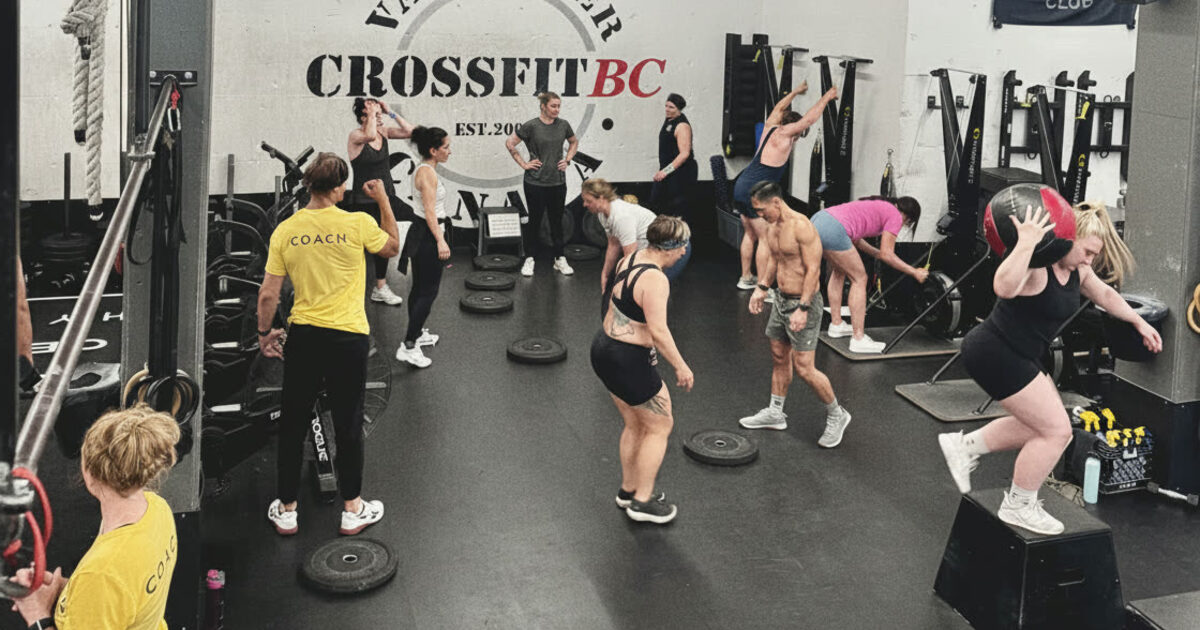
How to crush a deload week (yes, really)
- Show up. Skipping deload week is the most common mistake we see. Your routine, your crew and your movement quality all win when you're in the room.
- Leave the ego in the car. If the whiteboard says lighter, go lighter. Sneaking in heavy singles cancels out the whole point.
- Skip the secret second workout. The bonus 10K or the 100 burpees in your living room can wait a week.
- Treat every rep as practice. Perfect positions at lighter loads carry straight into the heavy stuff next block.
- Use your coach. Ask about that thing bugging you in your snatch or your wall balls. This is the week we have time.
- Recover on purpose. Get to bed a bit earlier, eat enough protein, go for walks, and hang out with people you like.
- Check in with yourself. Notice your energy, sleep, mood and any aches. A deload is a great read on how your body is handling training.
"But I feel amazing. Do I really need it?"
Probably, yes. Feeling great usually means the plan is working. Fatigue is sneaky, though. It tends to announce itself late, right around the time a knee starts talking back. The deload is how we keep you feeling great.
And if part of you is thinking "I didn't sign up for an easy week," we hear you. What you signed up for is coaching and a plan built to get you results over months and years. The deload is one of the most valuable parts of that plan, even if it's the least flashy.
For the racers and competitors
Training for HYROX, the Open or a local throwdown? Then you already know the best athletes in the world plan their lighter weeks and taper before race day. That's how they peak when it counts. Same principle, scaled to your life.
The long game
At CrossFit BC, we're building people who are still lifting, running, laughing and showing up ten years from now. Progress over perfection. Consistency over heroics.
Deload week is a small, quiet part of that. It's the exhale between big efforts. Take it, enjoy it, and then get ready, because the next block is coming.
See you at the whiteboard.
Coach Moose
New to CrossFit BC? Our programming is built for real people with real lives, and designed to keep you progressing for the long haul. Book your free intro and come see what training with a plan feels like.
References
- Bell L, Nolan D, Immonen V, et al. (2022). "You can't shoot another bullet until you've reloaded the gun": Coaches' perceptions, practices and experiences of deloading in strength and physique sports. Frontiers in Sports and Active Living. https://doi.org/10.3389/fspor.2022.1073223
- Bell L, et al. (2024). Deloading Practices in Strength and Physique Sports: A Cross-sectional Survey. Sports Medicine - Open. https://doaj.org/article/7d15e260e0ac4cff9e8c685dd7335389
- Coleman M, Burke R, Augustin F, et al. (2024). Gaining more from doing less? The effects of a one-week deload period during supervised resistance training on muscular adaptations. PeerJ 12:e16777. https://doi.org/10.7717/peerj.16777