Stronger, Not Softer: Why Strength Training Matters More After 40
Strength training is one of the smartest investments you can make after 40. Here is why backing off is the wrong move, and how to lift in a way that adds years to your life and life to your years.
There is a quiet conversation happening among adults in their forties, fifties, and sixties. It usually starts the same way: "I should probably take it easier." Then somebody pushes back, and the conversation gets honest.
This is the heart of the healthspan conversation. If the idea is new to you, start with what healthspan is and why it matters.
Because the truth is the opposite of what most of us were told. Strength training does not become less important with age. It becomes more important. It moves from a nice-to-have in your twenties to one of the smartest investments you can make in your forties and beyond.
Here is why backing off is usually the wrong move, what the research actually says, and how to start lifting in a way that pays off for the next 30 years.
The quiet emergency no one warned you about
Most people in their forties feel small changes and write them off. The stairs feel slightly harder. The grocery bag is a little heavier. Recovery from a long day takes a beat longer. Each shift is small. None of them feel urgent. So they get filed under "getting older."
What is actually happening is more specific. From around age 30, untrained adults start losing muscle. The clinical name is sarcopenia. The rough numbers are 3 to 8 percent of muscle mass per decade in your thirties through fifties, accelerating after sixty. By the time most people retire, they have lost a significant portion of the muscle that powered their adult life.
Muscle loss is not just an aesthetic problem. It drives almost everything we associate with aging poorly. Lower metabolism. Less stable joints. Worse balance. Higher fall risk. Lower bone density. Slower recovery. Less energy. Reduced insulin sensitivity. The list is long, and it is exactly the list most people accept as inevitable.
It is not. The single most reliable intervention against all of it is also one of the simplest: strength training.
Why strength matters more after 40, not less
In your twenties, you have a buffer. Your body forgives bad sleep, bad food, and inconsistent training. Strength is a nice bonus. It makes you look good and lift the couch.
In your forties, the buffer thins. You feel things you used to ignore. And the same training that was a bonus before now becomes a defense.
Five things shift after 40 that make strength non-negotiable.
1. Muscle loss accelerates if you do nothing
You are not just maintaining anymore. You are actively swimming against a current. Strength training is the swim.
2. Bone density starts to decline
Especially for women going through perimenopause and menopause, but for everyone. Loaded resistance training is the most effective non-medical signal to keep bones dense. Walking and yoga help, but heavy is the message bones need.
3. Balance and coordination quietly fade
Falls are the leading cause of injury in adults over 65, and most of them trace back to weak hips, weak ankles, and slow reaction time. Strength training, especially with single-leg work, hammers all three.
4. Metabolism shifts
Lean muscle is metabolically active. Less of it means a quietly lower resting metabolic rate, which is a big part of why so many adults gain weight in midlife despite eating the same. Strength training is the single most effective lever you have on this.
5. Confidence and identity
This one rarely makes the research papers but it shows up on the gym floor every week. Adults who start lifting in their forties and fifties report feeling more capable, less anxious, and more grounded in their bodies. That is not a small benefit. It is one of the main ones.
Strength is not about appearance. It is about capability.
The fitness industry has spent decades selling strength training as a body composition tool. That works for the algorithm, but it hides the real story.
The case for lifting after 40 is functional. It is the difference between independence and dependence. Between catching yourself when you trip and breaking a hip. Between playing on the floor with a grandchild and watching from the couch. Between travelling well in your seventies and being limited by what your body cannot do.
Strength training is the closest thing we have to insurance against decline. It is also the closest thing we have to a long-life upgrade. The same lifts that make you capable today are protecting the version of you that will exist in 2046.
Train smarter, not recklessly
Smart strength training after 40 looks different from what teenagers do on YouTube. It is not weaker. It is more intentional.
- Compound lifts first. Squat patterns, hinge patterns, push, pull, carry. These are the movements that change everything. Skip the machines until you have these.
- Progressive overload, paced. Add weight slowly. Five percent every couple of weeks is plenty. The goal is to be lifting more in two years, not next Friday.
- Strength range, not bodybuilder range. Most sets in the 4 to 8 rep range build strength efficiently with less joint stress than long, fatiguing sets.
- Recovery is not optional. Sleep, protein, and rest days do more for adults over 40 than any supplement on the market. Train hard. Recover harder.
- Coach over courage. The willingness to push is good. Without coaching, it becomes a fast track to injury. With coaching, it becomes a decade of progress.
Programs like 5/3/1 for aging adults are popular for exactly this reason: they are calm, progressive, and built for the long game. There is no rush. There is no need to be brave. There is just a clear path that works for the next 10 years.
Strength inside a bigger healthspan strategy
Strength is the anchor. It is not the whole answer.
The full picture for adults over 40 looks like this:
| Quality | Why it matters after 40 | Weekly target |
|---|---|---|
| Strength training | Muscle, bone, balance, metabolism | 2-4 sessions |
| Aerobic base (zone 2) | Heart, recovery, energy, mood | 2-3 sessions, 30-60 min |
| Higher-intensity cardio | VO₂ max, real-life capacity | 1 session |
| Mobility and movement | Joints, posture, range | Daily, 5-10 min |
| Sleep and recovery | Everything | Non-negotiable |
For more on the cardio side, our piece on zone 2 cardio is the natural companion read. For the bigger philosophy on training for the long game, the hybrid athlete approach covers it well.
Why community and coaching matter more, not less
This is the part rarely talked about. Solo strength training in your twenties is doable. Solo strength training in your forties, with a job, kids, a partner, and a body that has its own opinions, is much harder to sustain.
The two things that quietly carry adults through years of training are coaching and community. A coach watches your form, manages your volume, and stops you from doing something dumb on a tired day. A community gives you reasons to show up when motivation does not. Both compound.
It is also more fun. Lifting alone in a corner, watching the clock, is a chore. Lifting in a room of adults who know your name and notice when you are not there is a habit you keep for life.
How to start strength training in your forties
- Find a coach who works with adults. Not the cheapest gym. Not the loudest one. The one with experienced coaches who know what to do with a body that has lived a life.
- Start light, with the basics. Squat, hinge, push, pull, carry. Spend 6 to 12 weeks getting good at these before chasing variety.
- Show up twice a week, every week. Two sessions a week is enough to start making real progress. Consistency beats intensity, especially in year one.
- Eat enough protein. Most adults under-eat protein. Aim for roughly 0.7 to 1 gram per pound of bodyweight. It makes everything work better.
- Track wins that are not the scale. First time you carry both groceries up the stairs without thinking. First time you sit down and stand up without using your hands. First time you do something you used to avoid. Those are the wins that matter.
If you want to start in Vancouver
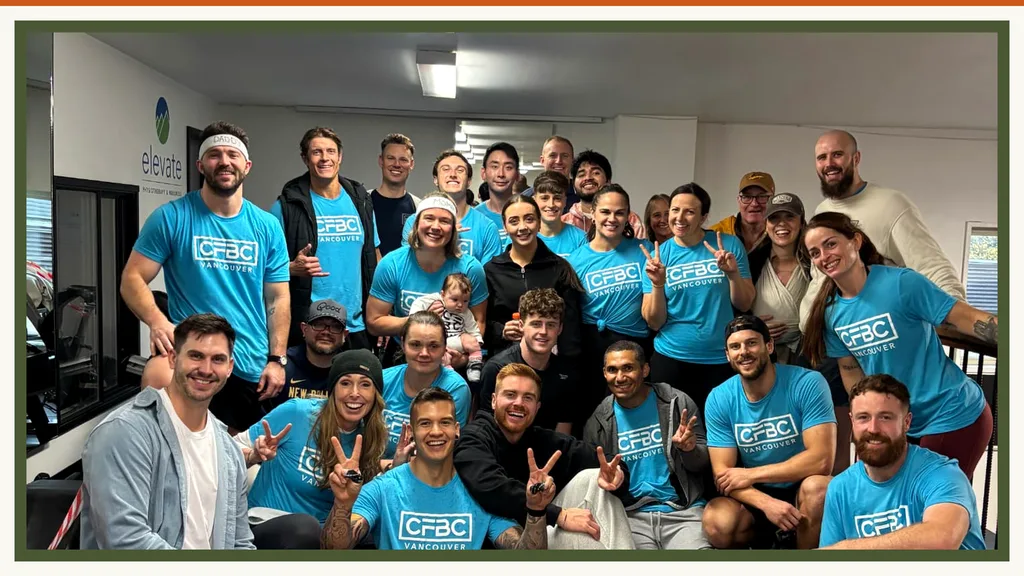
CrossFit BC has built specific programs for adults who want to take this seriously without being treated like teenagers in a commercial gym. Our Living Legends program is built for adults 60+. Our personal training is one-on-one with coaches who specialize in adult bodies. And our regular classes work brilliantly for anyone in their forties who wants the energy of a community along with the precision of a coach.
The simplest first step is to try three classes free. No pressure. Talk to a coach. See how it feels in a room of people who get it. If you would like a quicker read on which path fits, our find your coaching fit guide takes about five minutes and gives you a clear next step.
The conversation about strength after 40 should not end with "I should probably take it easier." It should end with "I should probably get started." That is the version of the conversation we have on the gym floor every week. We would love to have it with you.