Strong at 70 Beats Shredded at 27
Six-pack abs at 27 don't move the dishwasher when you're 73. Grip strength, leg strength, and lung capacity do. Here is how to train for the version of you that matters most.
There is a 27 year old at every gym in Vancouver who can take his shirt off on Wreck Beach and stop the conversation. There is a 71 year old at our gym who can deadlift his own bodyweight, carry his grandchildren up two flights of stairs without thinking about it, and get off the floor without using a single hand. One of them owns a body. The other one owns a life. We have coached enough of both to know which version of fitness actually matters, and it is not the one that gets the most likes.
Owning a life instead of just a body is really about healthspan. Here is the healthspan that actually matters.
The vanity tax
The vanity tax is what you pay when you spend your strongest decade training the parts of your body that show in a mirror and ignoring the parts that move you through the world. Bicep curls instead of farmer carries. Calf raises instead of weighted step-ups. A cosmetic six-pack instead of the kind of core that lets you pick up a couch on one end without your spine filing a complaint.
Every coach has watched this play out. The lean 27 year old who could not hold a bottom of a squat for thirty seconds. The Instagram physique who could not deadlift his own bodyweight off the floor with anything resembling clean mechanics. The aesthetics were real. The capacity was theatre. And the body, eventually, sends the bill for the difference.
What capacity actually means
Capacity is what you can do, repeat, recover from, and still have the energy to play with your kids that night. It is the deadlift you can pull, the kilometre you can run, the stairs you can climb with groceries in both hands, and the floor you can get up from without using a single piece of furniture. It is measured in years of independence, not days of definition.
The science here is brutally clean. The 2022 BMJ meta-analysis of 16 cohort studies found that grip strength alone, in adults over 50, predicted all-cause mortality more accurately than systolic blood pressure. Leg strength predicts whether you stay in your home or move into assisted living after 75. VO2 max predicts whether your body can survive a heart attack, a hospital stay, or a hip replacement. Six-pack abs predict whether strangers compliment you at a pool party. Pick the metric that matters.
What you lose if you do nothing
Between the ages of 30 and 80, the average sedentary adult loses 30 to 50% of their muscle mass. That is called sarcopenia, and it is the single biggest reason older adults lose independence. They cannot get off the floor. They cannot lift their own groceries. They cannot recover from a stumble because the leg strength that would catch them is no longer there. The loss is silent for decades. The bill arrives all at once.
Bone density tracks the same line. Power, the rate at which you can produce force, declines even faster than strength does, and power is what you need to catch a fall, jump out of a chair, or push a stalled car out of a parking lot at 70. Lose your power and the floor becomes a hazard. Lose your strength and the stairs become a hazard. Lose your VO2 max and the hill to your front door becomes a hazard. The decline is preventable. The default is not.
What you keep if you train
Now the good news, and it is a lot of it. The same body that defaults to losing 50% of its muscle mass can keep nearly all of it with two to three quality strength sessions per week. You can build new strength into your seventies. You can rebuild VO2 max after a heart event. You can put bone density back on after menopause. The body's capacity for adaptation does not retire at 40, or 50, or 65. The window only closes if you choose not to use it.
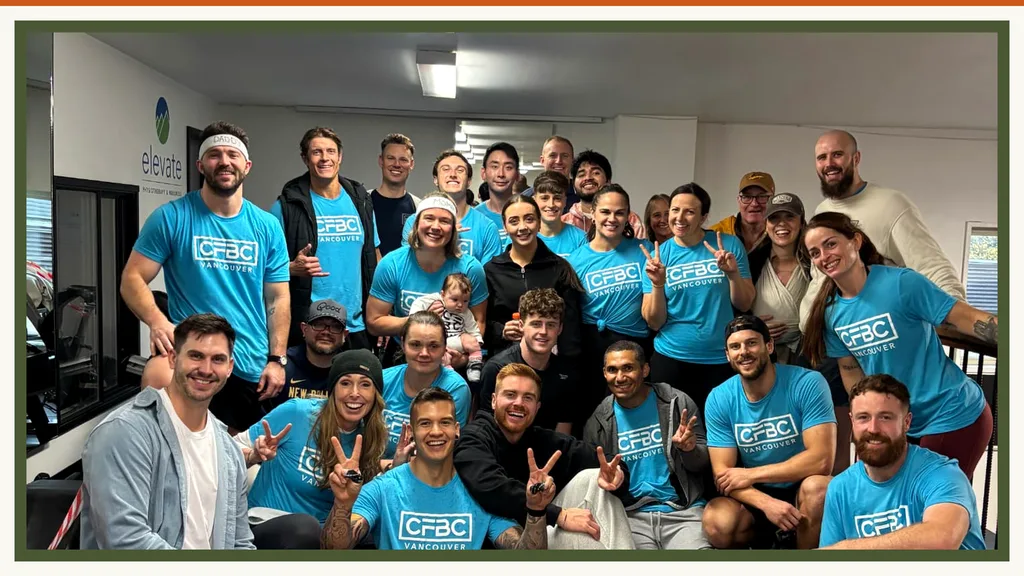
This is the story we have watched at CFBC for almost two decades. The 58 year old who came in deconditioned and squats 80 kilos two years later. The 64 year old who could not get off the floor in week one and is now doing pull-up negatives. The 71 year old who picks up his deadlift bar with the same grip strength he had at 50, because he never stopped earning it. None of them are exceptions. They are what happens when an ordinary person decides, on purpose, to train for the second half.
The three engines of late-life capacity
If you only had time to train three things to protect the version of you at 70, train these.
1. Grip and carry strength
The grip is the canary in the coal mine. It correlates with everything from cardiovascular health to cognitive decline, because it is a window into total-body neuromuscular health. Train it with farmer carries, deadlifts, and dead hangs. A 71 year old who can deadlift his bodyweight can almost certainly still live alone, drive, and travel. The opposite is also true.
2. Leg strength and power
Quads, glutes, and hamstrings are the engine of independence. They get you off toilets, out of chairs, up curbs, and out of bathtubs. Train them with squats, step-ups, lunges, and any version of getting up and down off the floor without using your hands. Power matters as much as strength here, which is why a 65 year old should still be doing some form of jumping, even if it is a small box. Power is what catches the fall.
3. Aerobic base
VO2 max is the most predictive number in longevity science. It is also the most trainable, well into your sixties and seventies. One to two Zone 2 sessions per week of 30 to 45 minutes will hold the line and then some. Walk uphill. Bike. Row. Swim. Whatever you will do for the next thirty years is the right answer.
Why Foundations is a longevity program in disguise
Our Foundations program is sold as a beginner course, and it is. It is also, quietly, one of the most leveraged longevity interventions a 40 to 70 year old can make. Five days of one-on-one coaching, intentional movement screening, a real squat and a real deadlift built from the ground up, and the breathing patterns that make conditioning sustainable. That is the toolkit that protects the next forty years. Most people walk in thinking they are buying technique. They are actually buying decades.
If you are already over 40 and have not lifted seriously before, this is the doorway. If you are 60 and have done barre or yoga for years but never picked something heavy off the floor, this is the doorway. If you are 70 and stronger than most of the 27 year olds in your neighbourhood already, you have already proved the point. Most of the people we see in Foundations are not chasing aesthetics. They are buying back capacity they cannot afford to lose.
What the strongest 70 year olds we know have in common
They are not freaks. They do not train six days a week. They do not chase PRs every session. What they do is show up two to three times a week, lift something heavy, walk uphill on the weekend, and refuse to let the calendar tell them what they are allowed to do with their body. They eat enough protein. They sleep. They keep their friends. They keep their gym. They lose a step here and there and then they earn it back. They make it look ordinary because, in the most important sense, it is.
The 27 year old with the six-pack does not envy them yet. He will, in about forty years, when his back hurts standing in line at the grocery store and the 70 year old in front of him is loading two bags into each hand and walking out without a thought. That gap is built one boring Tuesday at a time. The deposits are small. The compounding is everything.
Where to start, this week
Pick the door that fits where you are. If you have not lifted before or it has been more than five years, start with 5-Day Foundations. You get the floor laid by a coach who will not let you build on sand. If you are returning and you know how to squat, deadlift, and press, book a free intro and we will route you into the class or program that fits.
If you are already training and you just needed the reminder, you got it. Go pick something heavy off the floor today and put it back down on purpose. The version of you at 70 is taking notes.