
The Hybrid Shift: Why Everyone Is Training Like an Athlete Now
Strength plus engine. Power plus endurance. The new gold standard in fitness is not a sport, it is a way of training. Here is what the hybrid shift means, why it is happening, and how to know if it is for you.
A few years ago, the fitness world was tribal. You were a runner, or a lifter, or a CrossFitter, or a yoga person. You picked a lane and you stayed in it. Today, more people are quietly walking away from that single-lane life, and choosing something broader.
They want to be strong and have an engine. They want to lift heavy and run a 10K without dying. They want a body that works in the gym, on the trail, on the mountain, in the playground with their kids, and on the floor when they have to wrestle a coffee table up two flights of stairs.
That shift has a name. People call it hybrid training, or hybrid athlete training, and it is the fastest growing way to train in 2026.
Here is what it actually means, why it is happening now, and what to know before you decide if it is for you.
What is a hybrid athlete, really?
The term used to belong to a niche corner of the internet. Guys deadlifting 600 pounds and running marathons. Ultra runners who could also press their bodyweight overhead. Impressive, but very far from the average person trying to feel good in their forties.
The modern definition is more useful. A hybrid athlete is someone who deliberately trains for more than one quality, usually strength and aerobic capacity, and refuses to sacrifice one for the other.
You do not need a barbell PR or a marathon time to qualify. You qualify by intent. You are choosing not to be one-dimensional.
That sentence, almost word for word, is the most common goal we hear at the gym. Not "I want to compete." Not "I want abs." Just: I want a body that does not let me down.
That is the hybrid athlete mindset, even if no one ever pins a race bib on you.
Why is this happening now?
Three things stacked at once.
1. People got bored of being good at one thing and bad at everything else. The lifelong runner who could not carry their own luggage. The lifter whose pulse spiked walking up a hill. The yoga person who pulled a hamstring picking up a child. Single-modality fitness has obvious gaps, and people in their thirties and forties feel them.
2. HYROX exploded. A race format that mixes running with eight strength-and-conditioning stations gave the public a clear, finishable goalpost. Suddenly there was a format where you could train in a gym and race something that was not a triathlon or a marathon. We have written about how to train for HYROX without losing strength, and that conversation is now mainstream.
3. Healthspan got popular. Books, podcasts, and longevity research have moved the conversation from "live long" to "live well, longer." Healthspan asks: how many years of your life will you actually be capable, mobile, energetic, and sharp? The answer depends heavily on muscle and aerobic capacity. You need both. Hybrid training trains both.
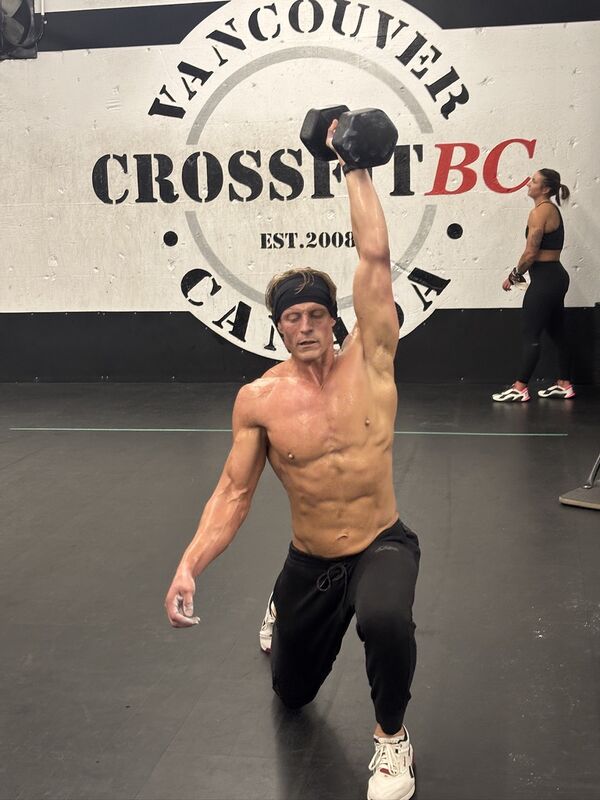
Strength and engine: why both, and not one
If you remember nothing else, remember this: strength and aerobic capacity are not opposites. They are partners.
Strength gives you force. It builds bone, joint integrity, posture, and the ability to absorb the world without breaking. It also raises the ceiling on every other quality. A stronger body recovers from cardio better, generates more power, and ages with more dignity.
Aerobic capacity gives you the runway to use that strength. It is the engine behind your day, your sleep, your mood, your recovery. It is what turns a strong body into a useful body.
Pick one and ignore the other, and you are leaving most of the value on the table.
The reason hybrid is not just a trend is the same reason a balanced retirement portfolio is not a trend. It is correct.
Hybrid vs single-modality fitness, side by side
| Quality | Pure strength training | Pure endurance training | Hybrid training |
|---|---|---|---|
| Builds muscle and bone density | Yes | Limited | Yes |
| Builds VO₂ max | Limited | Yes | Yes |
| Improves healthspan markers | Partially | Partially | Strongly |
| Translates to real life capability | Moderate | Moderate | High |
| Risk of feeling stale or one-dimensional | High | High | Low |
| Risk of overtraining if unstructured | Low | Moderate | Moderate |
The catch is in that last row. Hybrid training has the most upside, but it can also be the easiest to do badly. Adding a 5K to your week without removing anything else is not hybrid training. It is just more.
Hybrid for real life, not for a race
Most hybrid trainers we coach at CrossFit BC will never enter a HYROX. They are not training for a finish line. They are training for a life.
Here is what their week often looks like:
- Two to three strength-focused sessions: compound lifts, accessory work, intentional progress over months.
- Two to three conditioning sessions: mixed-modal CrossFit-style work, sled and rower intervals, or longer aerobic pieces.
- One easy aerobic day: a long walk, an easy bike, a zone 2 row. We have written more about why zone 2 matters.
- One day that is sacred for life: kids, partner, sleep, sun, friends, no gym.
That is it. No special supplements. No 5 a.m. cold plunges (unless you love them). Just a structured rhythm that makes them stronger and fitter at the same time, week after week, year after year.
Where CrossFit and HYROX fit in
CrossFit was hybrid before hybrid was a marketing word. The whole point of the methodology, when it works, is being broad and good across many domains: strength, endurance, gymnastics, power, accuracy, balance.
HYROX took that idea and packaged it into a race anyone can train for in a gym. We unpack how the two compare in our deeper piece on CrossFit vs HYROX, but the short version is: they are cousins, not enemies. CrossFit makes you a more complete athlete. HYROX gives you a clear goal to point your training at.
You can train both inside a single program. We do it every day. The difference between people who improve in both and people who burn out is whether someone is steering the volume.
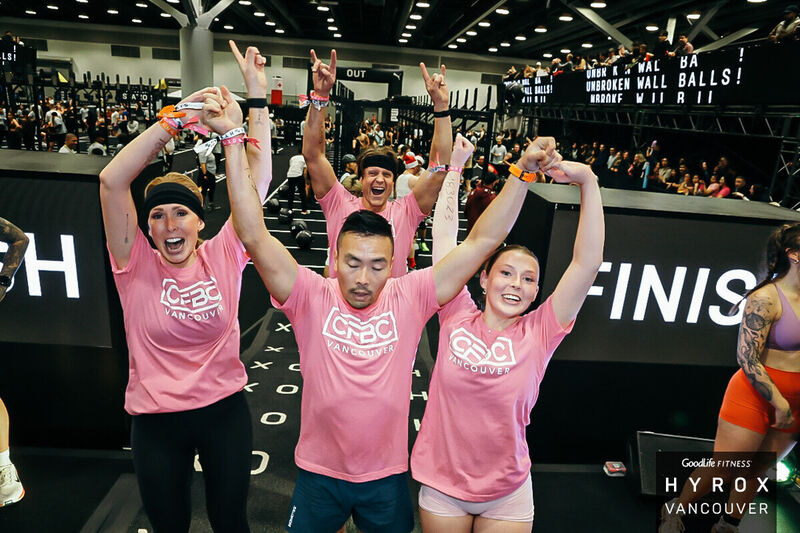
How to start hybrid training without burning out
- Pick a strength anchor. Choose one main lift family per session: squat, hinge, push, pull. Build it for 6 to 12 weeks before chasing variety. Strength loves consistency.
- Add intentional cardio, not random cardio. Most weeks should have one harder interval session and one easier zone 2 session. Sprinkle the rest in your daily life: walks, bike rides, weekend hikes.
- Respect the leftovers. Sleep, food, and stress are not separate from training. They are part of it. The hybrid athletes who last 10 years protect their recovery as fiercely as their workouts.
- Use a coach when the variables stack up. One quality is easy to manage alone. Two qualities, with a job and a family, is where things start falling over. A good coach is a force multiplier here.
- Train for the next decade, not the next eight weeks. Hybrid training is a long game. The gains are quieter than a transformation photo, but they compound for the rest of your life.
If you want to try it in Vancouver
CrossFit BC has been doing hybrid training before it had a label. Our floor splits between classic CrossFit and dedicated HYROX-style conditioning, and our coaches help you balance the two so you actually get stronger and fitter at the same time.
If you are curious whether hybrid training fits your life, the simplest next step is to come in. Try three classes free, see how it feels, and let one of our coaches help you map out where to start. If you would rather find your fit before you book, our short coaching fit guide will point you to the right path in under five minutes.
Either way: there is a reason more people are choosing both. The hybrid shift is not a trend. It is what fitness was always supposed to be.