Why the Future Belongs to the Hybrid Athlete
For thirty years, fitness culture forced you to pick a side. Lifter or runner. CrossFitter or triathlete. The next decade rewards the athlete who refuses the choice. Here is why, and how to actually become one.
Walk through any serious gym in 2026 and watch what the strongest, healthiest people are actually doing. They are not just lifting. They are not just running. They are stitching the two together on purpose, week after week, for years.
This is not a trend. It is a course correction. For thirty years, the fitness industry told you to pick one tribe and stay loyal to it. Powerlifting or endurance. Bodybuilding or triathlon. CrossFit or HYROX. The athletes who quietly outlasted everyone, in performance and in health, ignored the tribal lines from the start. They built strength and engine and durability. They built the hybrid athlete before the word existed.
The next decade belongs to that athlete. Here is the case, and the playbook.
The era of the specialist is ending
From 1990 to about 2015, fitness was a story of specialists. The marathon runner with no upper body. The powerlifter who got winded climbing stairs. The bodybuilder who could not touch their toes. Each tribe had its trophies and its blind spots, and each blind spot was someone else's superpower.
That era is closing for two reasons. The first is cultural. Hybrid sports like HYROX, DEKA, and the CrossFit Open exposed the cost of specialization in public. A 200 kilogram squatter who walks off the floor after a 1 kilometre run sells fewer tickets than a 140 kilogram squatter who can also run a sub-7 mile. People noticed.
The second reason is medical. The longest-running studies on healthspan, the years you live well, all converge on the same two predictors: aerobic capacity (VO2 max) and muscular strength. Not one. Both. Train one and ignore the other and you give back years of healthy life. The peer-reviewed evidence here is no longer a debate.
This is also why the conversation about training after 40 has shifted. Longevity now demands the hybrid stack, not the specialist's narrow trophy case.
What a hybrid athlete actually is
The word gets thrown around loosely. Let's define it properly. A hybrid athlete is someone who can:
- Squat, press, and deadlift at meaningful loads (roughly 1.5 times bodyweight squat, bodyweight press, 2 times bodyweight deadlift for a trained adult).
- Sustain a conversational pace for 60 to 90 minutes without falling apart.
- Move through full ranges of motion in the shoulders, hips, and thoracic spine.
- Recover from a hard week well enough to do another one next week, fifty-two weeks a year.
That is the floor. Above it, the sport you choose, CrossFit, HYROX, mountain athletics, jiu-jitsu, hockey, decides which slice of the picture you sharpen. Below it, you are a specialist with a fragile margin.
The four pillars of a hybrid build
Every successful hybrid program we have ever coached, across hundreds of athletes at CrossFit BC, sits on the same four pillars. Names change. The pillars do not.
| Pillar | What it builds | What it protects |
|---|---|---|
| Strength | Force production, bone density, lean mass | Independence in the second half of life |
| Aerobic engine | VO2 max, mitochondrial density, recovery rate | Cardiovascular health, all-cause mortality |
| Sport-specific work | Skill, intensity tolerance, competitive edge | Engagement, identity, the reason you show up |
| Durability | Mobility, tissue tolerance, sleep, nutrition | The whole system. This is the multiplier on the other three. |
Most athletes are good at one pillar, decent at one more, and absent on the other two. The work of becoming hybrid is not adding more sessions. It is closing the gaps you have been ignoring.
The 4-day-a-week hybrid template
Here is the template we use with the largest group of members at CFBC: working professionals in their 30s, 40s, and 50s who want to be strong, fit, and still moving well in twenty years. It is four sessions per week. It is not glamorous. It works.
That is the entire template. No periodized 16-week peaking blocks. No daily two-a-days. Four sessions, run for the next ten years, will outperform almost any flashier plan you can buy.
Why this matters more after 40
If you are under 30, you can get away with single-modality training for a while. Your body forgives a lot. After 40, the math changes. Strength loss accelerates if you are not lifting. VO2 max declines roughly 10 percent per decade if you are not training it. Connective tissue gets less forgiving. The hybrid athlete is not just chasing performance. They are running an insurance policy on the next forty years of their life.
This is the part of the story the fitness industry undersells, because it is harder to put on a t-shirt. But this is where the real prize lives.
The mistakes we see most often
- All intensity, no aerobic base. Five high-intensity classes per week and zero zone 2. The engine never gets built. The body never recovers. Burnout in eighteen months.
- All lifting, no engine. A 180 kilogram squat and a heart that quits after a single flight of stairs. Strong on paper. Fragile in real life.
- Sport without strength. Endless HYROX simulations, no barbell work. The aerobic engine is great. The body breaks down by year two because the structural ceiling is too low.
- No recovery currency. Sleep is treated as optional, nutrition as a vibe, mobility as something other people do. The body keeps the receipts.
What this looks like at CrossFit BC
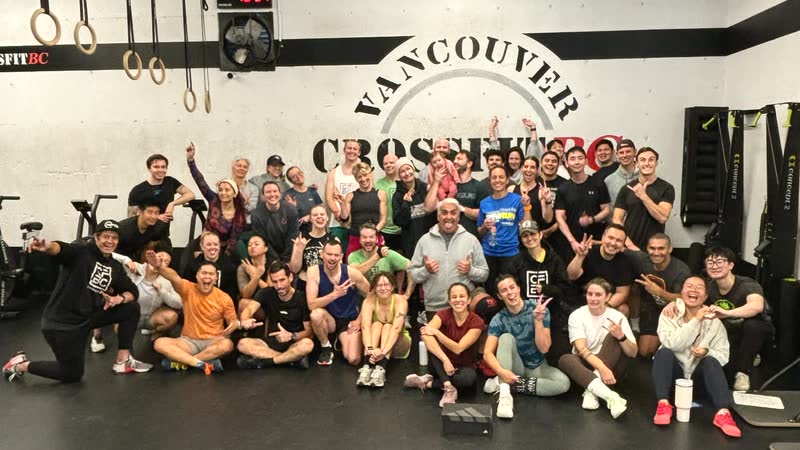
This is the model we coach. CrossFit classes give the strength and the gymnastic ceiling. HYROX programming gives the engine and the pacing. Run club gives the long aerobic base. Personal training closes individual gaps. Most of our long-tenured members touch all four in any given month, and those are the members who are lifting heavier and racing faster at 45 than they were at 30.
If you want to read the head-to-head verdict between the two cultures we coach, see CrossFit Athlete vs HYROX Athlete: Who Wins? If you want the build for a specific HYROX race, see our 12-week HYROX prep timeline. If you want the strength piece without losing your race fitness, how to train HYROX without losing strength covers it.
The next ten years
The fitness industry will keep selling you specialization, because it is easier to market a single program than a complete athlete. Ignore the noise. The body that thrives in the next ten years is the one that lifts heavy on Monday, runs long on Tuesday, presses overhead on Thursday, races on Saturday, and sleeps eight hours every night.
That body is not glamorous on day one. It is unstoppable by year five. And it is still standing at sixty, still strong, still moving, still in the room.
Ready to train as a hybrid athlete? See our programs, explore HYROX at CFBC, or book a free intro. We will help you build the body that wins the next decade, not just the next workout.