
Eat Real Food: The Simplest Nutrition Advice That Actually Works
You don't need a nutrition degree. You don't need a meal plan. You need one sentence and the willingness to keep it simple. Here's how CrossFit's nutrition prescription works in real life.
There's a graphic that's been floating around CrossFit affiliates for years. You've probably seen it. Meat and vegetables, nuts and seeds, some fruit, little starch, and no sugar. That's it. The entire CrossFit nutrition prescription, expressed in emojis.
And honestly? It's the best piece of nutrition advice most people will ever get.

The Laziest Nutrition Plan That Actually Works
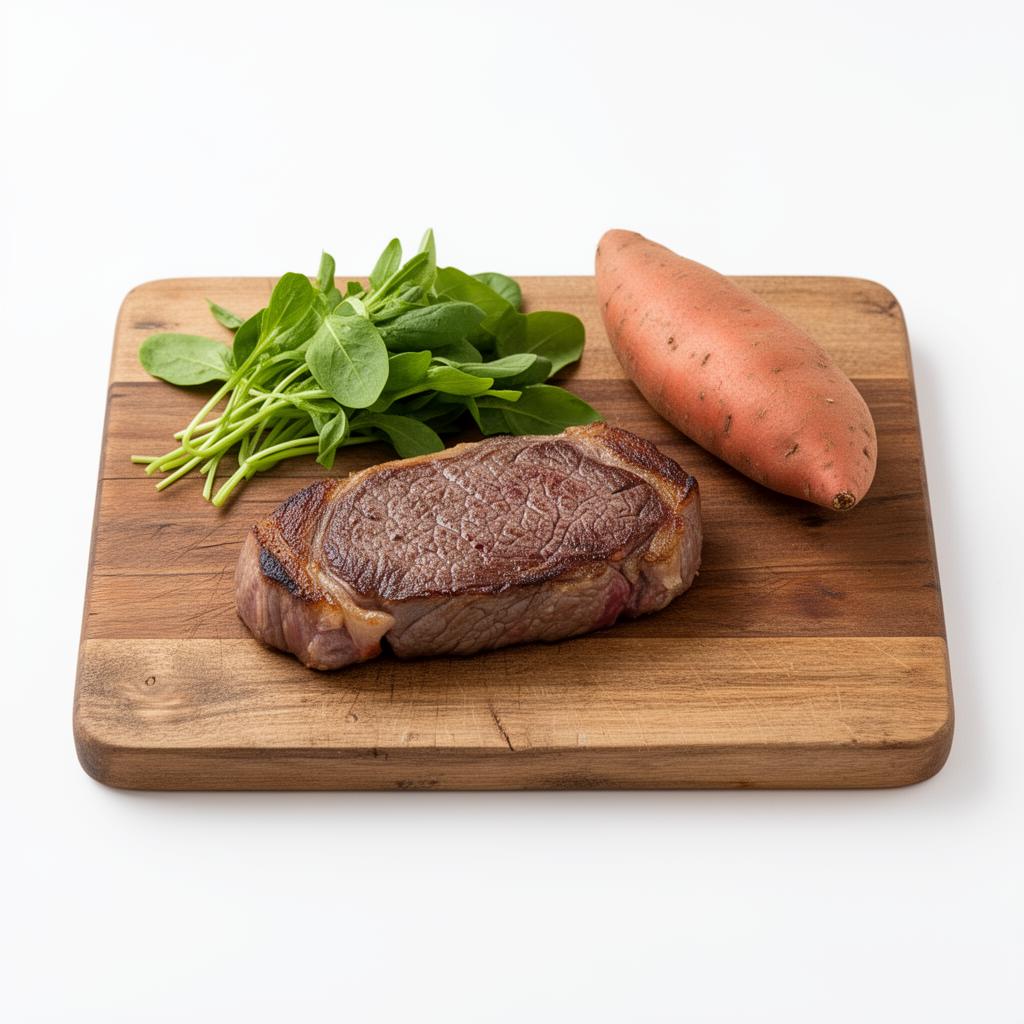
Here's something we tell our members all the time: being "lazy" about nutrition doesn't mean you're unhealthy. It means you've figured it out.
The people in our gym who look and feel their best? Most of them don't track macros. They don't weigh their chicken. They don't meal prep in color-coded containers on Sunday afternoon while listening to a podcast about biohacking.
They just eat real food. Consistently. And they stopped overthinking it a long time ago.
That's the whole secret. Not discipline. Not willpower. Just simplicity, repeated enough times that it becomes automatic.
What This Looks Like in a Typical Day
Let's make it real. Here's what a day of eating looks like for someone who's "lazy" about nutrition in the best possible way:
☀️ Breakfast (5 minutes)
Three eggs scrambled in butter. Handful of spinach thrown in the pan. Half an avocado on the side. Coffee.
That's protein, vegetables, and healthy fat. No recipe needed.
🏋️ Post-Workout Lunch (10 minutes)
Leftover grilled chicken from last night. Big pile of roasted broccoli and sweet potato. Olive oil drizzled on top. Salt. Done.
Meat, vegetables, a little starch. Reheated, not engineered.
🍎 Afternoon Snack (2 minutes)
Apple with almond butter. Or a handful of mixed nuts and some berries.
Some fruit, nuts and seeds. Straight from the graphic.
🍽️ Dinner (20 minutes)
Salmon fillet, pan-seared. Big salad with whatever's in the fridge: peppers, cucumber, tomatoes, feta. Olive oil and lemon.
Protein, vegetables, healthy fat. No counting. No stress.
Notice what's missing: no protein shakes (unless you want one). No supplements. No "cheat meals" because nothing is off-limits. No anxiety about whether the sweet potato was 4 ounces or 6. This person isn't on a diet. They're just eating food their body recognizes as food.
Why This Simple Approach Outperforms Most Diets
The research supports what CrossFit has been saying since 2002. A 2015 meta-analysis in the American Journal of Clinical Nutrition found that diets emphasizing whole, minimally processed foods consistently outperformed calorie-counting approaches for long-term weight management and metabolic health.
Here's why the "eat real food" approach works better than most structured diet plans:
- It's sustainable. You can eat this way for decades. Try saying that about keto, Whole30, or whatever the next trend is.
- It requires zero calculation. No apps, no scales, no tracking. Just look at your plate. Is it mostly real food? Great. Move on with your life.
- It self-regulates. When you eat mostly whole foods, your hunger signals work properly. You eat when you're hungry, stop when you're full. Your body was designed for this.
- It works at any restaurant. Grilled protein, vegetables, skip the bread basket. You don't need a special menu.
- It scales with your training. Training more? Eat more of the same foods. Training less? You'll naturally eat less. The framework doesn't change.
CrossFit's Quiet Revolution in Health Education
Most people know CrossFit changed fitness. Fewer people realize how much CrossFit changed the global conversation about nutrition and health.
Greg Glassman, CrossFit's founder, started publishing articles about nutrition, chronic disease, and the relationship between processed food and metabolic illness back in the early 2000s. At the time, the mainstream fitness industry was still selling low-fat yogurt and 100-calorie snack packs. CrossFit was saying: eat meat and vegetables, and stop eating sugar.
Here's what's happened since:
15,000+
CrossFit affiliates worldwide spreading this nutritional framework to their communities every single day.
$4.2B
The estimated value of the global functional fitness market in 2024, driven largely by CrossFit's methodology that pairs training with nutrition.
88%
Of CrossFit participants report improved dietary habits after starting CrossFit, according to community surveys.
2019
CrossFit Health launched, partnering with scientists and physicians to challenge institutional nutrition guidelines and fight chronic disease.
CrossFit didn't just put barbells in people's hands. It put a magnifying glass on the food system. CrossFit Health, the organization's health arm, has funded research, hosted symposiums with physicians and researchers, and directly challenged the relationship between the food industry and public health policy.
The result? A grassroots movement of millions of people who now read labels, question processed food, and understand that what you eat is as important as how you train. That shift started in CrossFit gyms, including ours.
The "World's Most Dangerous Diet" Is Just... Food
Here's the thing. When CrossFit first started talking about nutrition this way, it was considered radical. "Eat meat" was controversial. "No sugar" was extreme. "Skip the grains" was borderline heretical.
Fast forward to today, and the science has caught up. Study after study shows that diets high in ultra-processed foods are linked to increased risk of obesity, type 2 diabetes, cardiovascular disease, and even depression. A landmark 2019 NIH study found that people eating ultra-processed diets consumed 500 more calories per day than those eating whole foods, even when both diets were matched for available calories, sugar, fat, and fiber.
CrossFit didn't need a clinical trial to figure this out. It had thousands of affiliates watching the same thing play out in real time: people who ate real food performed better, recovered faster, and looked healthier. The gym floor was the laboratory.
How We Approach Nutrition at CrossFit BC
We don't sell meal plans. We don't push supplements. We don't do 21-day detoxes.
What we do is create an environment where eating well becomes contagious. You start showing up to classes. You start training hard. You start hanging out with people who are also training hard. And almost without thinking about it, your habits start to shift.
That's not a coincidence. It's community-driven behavior change, and it works whether you're trying to drop body fat, build muscle, prep for a HYROX race, or just stop feeling tired all the time.
Here's what nutrition coaching looks like at CrossFit BC:
- Plate-based, not gram-based. We start with what's on your plate before we ever talk about macros.
- Built into your training. Coaches notice when your energy crashes mid-WOD or your recovery suffers. We connect those dots in real time.
- Real food first. Supplements have a place, but only after the food is dialed in. Most people don't need a creatine recommendation. They need to eat more vegetables.
- No guilt loops. If you ate pizza on Friday, that doesn't define your week. The next meal is the only one that matters.
The 80/20 Reality
Let's be honest. Nobody eats perfectly. Not the elite CrossFit athlete. Not the registered dietitian. Not the founder of any diet you've ever heard of.
The graphic says "no sugar," and yes, that's the ideal. But the practical truth is this: if 80% of what you eat is meat, vegetables, nuts, seeds, and fruit, the other 20% isn't going to derail you. Your body can handle the occasional indulgence when the foundation is solid.
The mistake most people make is reversing those numbers. They eat 80% processed convenience food and try to "fix it" with 20% real food. Then they wonder why they don't feel better.
Flip the ratio. That's it. That's the protocol.
Start Here
If you've been overthinking nutrition, here's your permission slip to stop. The framework is on a piece of paper. The food is in your fridge. The hard part isn't figuring out what to eat. The hard part is just doing it consistently, and that gets a lot easier when you have a community around you doing the same thing.
If you want to train in a place where the nutrition advice is this simple, the coaching is this honest, and the people are this committed to actually feeling good in their bodies for the long haul, come try a free class at CrossFit BC. We'll show you what eating real food and training real hard looks like in real life.
No meal plans. No tracking apps. Just food that works, and a community that keeps you doing it.
More on real-food nutrition
- 10 "Healthy" Foods Quietly Keeping You Overweight
- The Breakfast Sandwich Glow-Up
- The Pizza Glow-Up
- Stop Calling It a Cheat Meal
- Your Calendar Is Your Real Diet
- 5 "Healthy" Habits Holding You Back
- Before You Reach for GLP-1
- Can You Lose 14 Pounds in 2 Weeks?