How to Build Your First Bar Muscle-Up the Smart Way
A bar muscle-up is not just a bigger pull-up. It is timing, strength, and confidence working together at the exact same moment. Here is the coach's progression that gets you there without the chest scrapes and wasted months.
There is a stage in every CrossFitter's journey where they can do pull-ups, they can do dips, and they look up at the bar muscle-up and think: I should be able to do this. Then they jump up, pull as hard as they can, miss the transition, and slide back down with a bruised forearm and a confused look on their face.
If that's you, welcome. You're in great company. The bar muscle-up is the movement where raw strength stops being enough. It rewards timing, position, and patience in a way that very few other gym skills do. Most people don't fail because they're weak. They fail because nobody taught them what to actually do with the strength they already have.
This is the progression we use on the floor. It works.
What a bar muscle-up actually is
A bar muscle-up is a continuous movement where you start hanging from a pull-up bar, generate a kip, pull explosively while sending your hips into the bar, and rotate your upper body over the bar into the top of a dip position, then press to lockout.
It is two movements stitched together, a pull and a dip, with a fast rotational transition in the middle that ties them. That transition is where almost everyone gets stuck.
Video credit
The cleanest free walkthrough of the BMU transition we've found. Use it alongside the CrossFit BC prerequisites: 5 strict pull-ups + 5 strict dips + 3 strict chest-to-bar before you spend a single rep chasing this skill. If those gates aren't closed yet, the timing in this video will reinforce a chicken wing instead of fixing it.
Why pull-up strength alone is not enough
Plenty of athletes can do ten strict pull-ups and still cannot do a single bar muscle-up. That is not a strength problem. It is everything else:
- Timing. The hips have to drive into the bar at the exact moment the pull peaks. Too early, you stall. Too late, you miss.
- Hollow and arch positions. The kip is a controlled swing between two body shapes. If you don't own those shapes, you don't own the kip.
- Turnover speed. Once your sternum reaches bar height, your elbows have to whip around in a fraction of a second. Slow turnovers fail.
- Confidence. Half-attempts almost always miss. The bar muscle-up rewards committed effort, not careful effort.
- Dip strength on the bar. The catch is a deep dip with rounded shoulders. If you can't press out of that, the rep stalls at the top.
The progression: what to actually train
Phase 1: Build the kip swing
Before you train muscle-ups, train the swing. From a hang, alternate between a hollow body shape (ribs in, hips slightly forward, toes in front) and an arched shape (chest up, glutes engaged, toes behind). The transition between the two shapes is your kip.
This is not impressive. It is also the single most overlooked piece of bar muscle-up training. Spend two weeks on it.
Video credit
PowerMonkey Fitness(opens in a new tab)
The kip is a position drill, not a power drill. Slow it down and own the hollow-arch shapes before you ever try to muscle-up. PowerMonkey breaks down the rhythm cleanly, drill it for two weeks before progressing.
Phase 2: Big chest-to-bar pull-ups
Train explosive chest-to-bar pull-ups, both strict and kipping. The bar muscle-up requires you to pull past the bar, not just to it. If your highest pull is collarbone level, you don't have the elevation to transition yet. Aim for sternum-to-bar contact every rep.
Video credit
Pull past the bar, not just to it. Sternum contact every rep is the elevation gate for the bar muscle-up, if you can't reach it here, you won't find it under load.
Phase 3: The hip drive
Hang from the bar in an arched position. Snap your hips forward and up as if you're trying to kick the bar with your zipper. Your toes should rise above the bar. This is the engine of the movement.
Practice this without trying to muscle-up. Just learn what a violent, well-timed hip drive feels like. Three sets of five, twice a week.
Video credit
The hip pop is the engine, toes above the bar, zipper to the bar, violent and well-timed. Drill it as its own skill before stitching it into the full rep.
Phase 4: Banded transitions
Loop a band over the bar and around your hips. From a hang, kip and pull, and let the band assist you over the top. The goal is not to do reps. The goal is to feel what a successful transition feels like in your body. Five to ten reps per session, focusing on a fast turnover.
Video credit
Sara Callahan(opens in a new tab)
The band isn't a crutch, it's a teacher. Use it to feel a fast, committed turnover, then take it away one rep at a time. Five to ten focused reps beats a long set of sloppy ones.
Phase 5: Jumping muscle-ups
Lower the bar so it is roughly forehead height when you stand under it. From a small jump, pull and turnover into the top of the bar. This drill teaches the rotation pattern with reduced strength demand. Five clean reps is worth more than twenty messy ones.
Video credit
Train Your Weakness(opens in a new tab)
Lower the bar, take the strength demand off, and groove the rotation pattern. Five clean reps with a fast turnover beat twenty messy attempts every session.
Phase 6: The first attempt
When your kip is clean, your hip drive is sharp, your chest-to-bar is reaching sternum, and your transition feels familiar from band and jump work, attempt one. Commit fully. Half-tries miss. If it doesn't go on the first attempt, rest, reset, and try again. Three attempts max per session early on. Quality over volume.
Common mistakes that delay your first rep
- No kip. Pulling straight up will work for a strict muscle-up at elite strength levels. For everyone else, the kip is the entire reason this movement is achievable.
- Pulling too early. The pull should follow the hip drive, not lead it. Hips first, pull second, transition third.
- Looking down. Eyes go where the body follows. Look at the ceiling above the bar, not at your feet.
- Slow turnover. If your elbows aren't above the bar within a heartbeat of your sternum reaching it, you'll stall. Train the whip.
- Half-attempts. The most common reason for failed reps is hesitation. Commit fully or reset and try again. There is no middle ground.
Video credit
If your reps keep missing in the same spot, the fix is almost always in here. Watch with your own video next to it, most BMU breakdowns are invisible from the inside.
Realistic expectations
Once you have your strict pull-ups and a clean kip swing, four to nine months is a typical window for a first bar muscle-up. Some athletes get there in six weeks. Some need a year. The variables are how often you train it, how clean your kip is, and whether you have someone watching your reps and giving you real feedback.
Here is the part nobody tells you: most people who fail to get a bar muscle-up don't fail because they can't do it. They fail because they stop training it specifically and just hope it shows up. It won't. You have to court it.
When to bring in a coach
The bar muscle-up is the single most coachable skill in the gym, because most of what is wrong is invisible to you. You feel the failed rep but you don't see what your hips did, where your eyes went, or how your timing slipped. A coach watching from the side will fix in 20 minutes what you've been wrestling with for three months.
If you want a structured, progressive plan with eyes on every rep, Personal Training is built for exactly this kind of skill work. If you want it baked into your week alongside your regular training, Hybrid Coaching is a strong fit.
Already have your pull-up but new to the muscle-up conversation? Start with our first pull-up progression and make sure that base is rock solid first.
From our community
@crossfitbc(opens Instagram in a new tab)
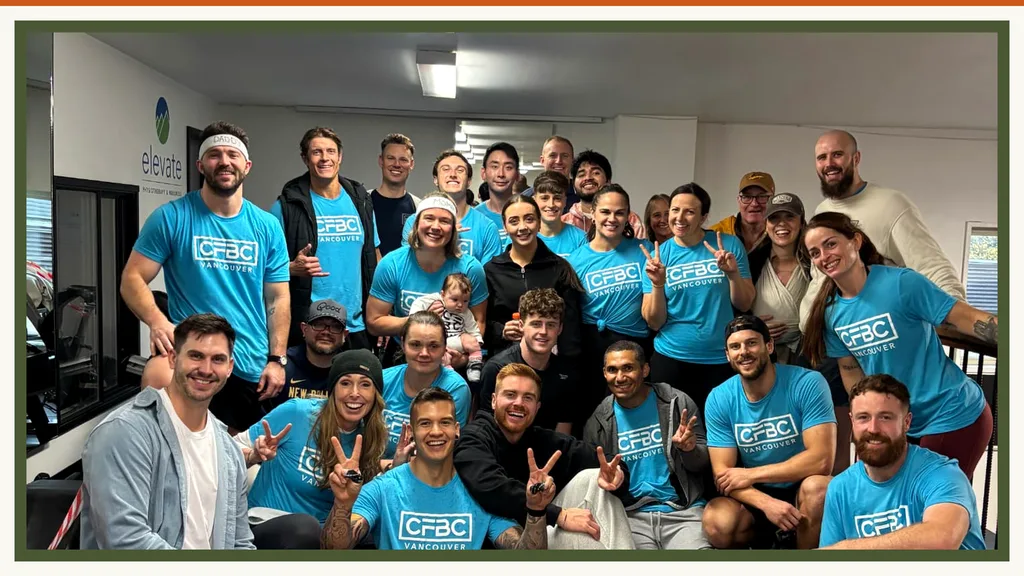
Real moment, real community. This is what we mean when we say you don't grind through skill work alone here.
Your first bar muscle-up is closer than the bruised forearms suggest. Train the kip. Train the hips. Commit fully. We'll see you over the bar soon.