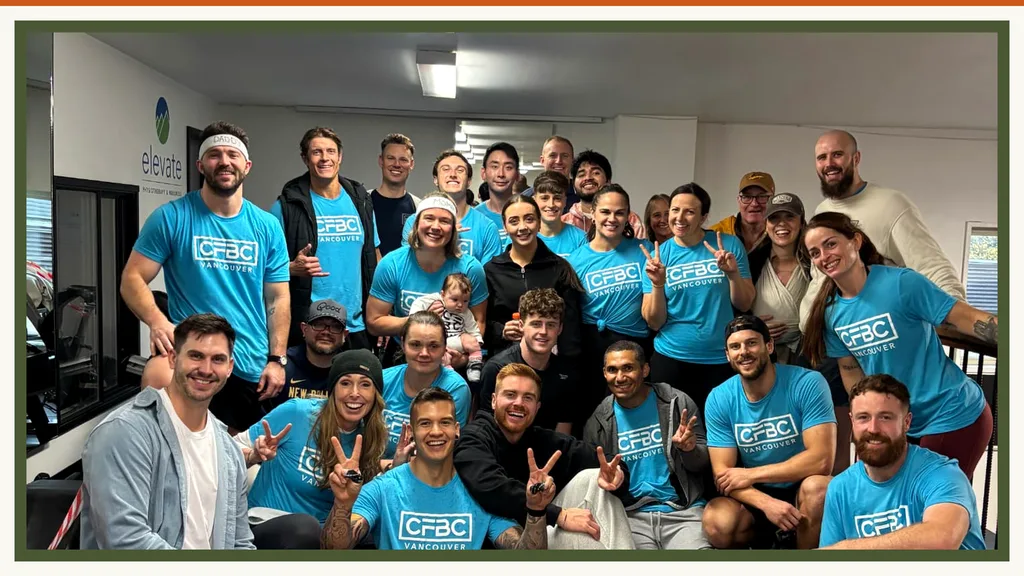
The first 14 days after HYROX
By Dai Manuel (Coach Moose). Last reviewed 4 November 2026.
For the first 14 days after HYROX, recover first and train second. Sleep well, eat enough protein spread through the day, and keep moving gently while soreness settles. Ease back into training in the second week. Dark urine with severe muscle pain or weakness is not normal soreness: get medical care.
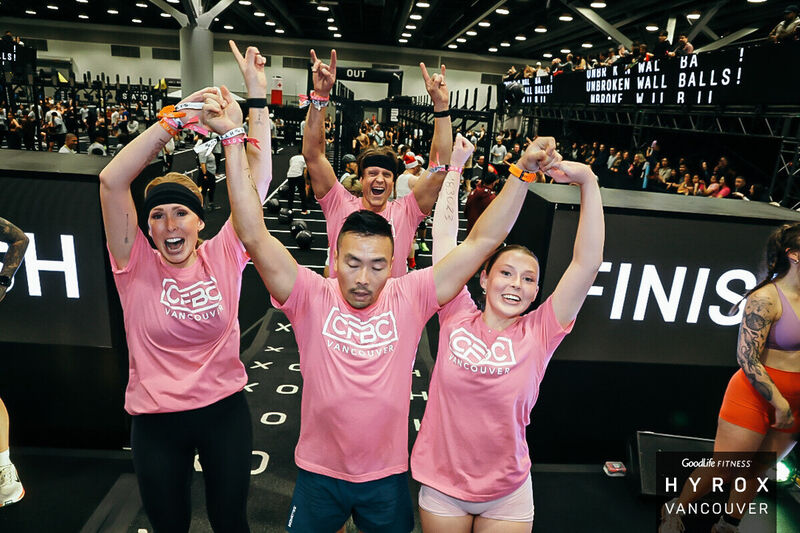
General education, not medical advice. If you have a health condition, an injury or symptoms that worry you, talk to your doctor.
First: when it is not normal soreness
Any hard muscle work can, rarely, lead to rhabdomyolysis, a breakdown of muscle that can harm the kidneys. The classic signs are muscle pain, weakness and dark, tea-coloured urine 1. If you notice dark urine with severe muscle pain, swelling or weakness after your race, get medical care the same day. Do not wait it out.
Days 1 to 3: rest, eat, move gently
Soreness after a race like HYROX is expected, especially after the lunges and wall balls. Delayed onset muscle soreness can reduce range of motion and strength, and pushing back into hard training too early while it lingers may raise your risk of further injury 2.
- Sleep. Research links sleep loss to poorer exercise performance and to physiological changes that can look like overtraining, although the evidence is mixed 3. Give yourself extra time in bed.
- Protein. For people who exercise, a daily intake of roughly 1.4 to 2.0 grams of protein per kilogram of body weight, spread across the day, is enough for most 4.
- Easy movement. A pooled analysis of 99 studies found active recovery, massage, compression garments and cold-water immersion all reduced soreness to varying degrees, with massage the most effective 5. A walk or an easy spin counts.
Days 4 to 7: light training
This is how we coach it, not a prescription. Once day-to-day soreness has mostly settled, come back to class at a conversational effort. Keep loads light, skip the heavy lunges and wall balls, and leave each session feeling better than you arrived. Our recovery guides cover sleep, protein and easy movement in more depth.
Days 8 to 14: build back
Gradually bring back normal training. Add one harder session at a time. If you still feel flat, sore or unmotivated for days on end, that is a sign to back off. Fatigue, a drop in performance and mood changes are among the warning signs of training outrunning recovery 6.
Use these two weeks to look back, too. What went well? Where did you lose time? That conversation sets up your second HYROX.
An honest note on the evidence
We could not find research on recovery after HYROX itself. The studies above are in athletes and exercisers more broadly. The day ranges here are our coaching approach, built on that research, not a tested HYROX protocol.
Train for it with people like you
Try 3 free classes in our trial-friendly times at CrossFit BC in Olympic Village, 10 minutes from the race venue. Every level is welcome and no card is needed. HYROX group classes are for ages 16 and up.
Claim 3 free classesQuick answers
How long does it take to recover from HYROX?
We could not find research on HYROX recovery specifically. In our coaching, we bring people back to normal training in the second week, after a few days of rest and light movement. Back off if you still feel flat or sore.
Should I train the day after HYROX?
Rest or move gently. A walk or easy spin is fine. Active recovery, massage, compression and cold-water immersion all reduced soreness in a 2018 meta-analysis, with massage the most effective (Dupuy and colleagues).
How much protein should I eat after HYROX?
For people who exercise, roughly 1.4 to 2.0 grams per kilogram of body weight per day, spread across the day, is enough for most (ISSN position stand, 2017).
When should I see a doctor after HYROX?
Get medical care the same day if you have dark, tea-coloured urine with severe muscle pain, swelling or weakness. These can be signs of rhabdomyolysis (Torres and colleagues, 2015).
When can I train hard again after HYROX?
In our coaching, usually in the second week, one harder session at a time, once day-to-day soreness has settled. Training hard while very sore may raise injury risk (Cheung and colleagues, 2003).
Keep reading
Coached HYROX classes every week in Olympic Village.
December 17 to 20, 2026 at the Vancouver Convention Centre.
Free: The HYROX Race-Ready Playbook
Station-by-station breakdowns, pacing strategies, race-day nutrition, gear checklists and the training splits our HYROX athletes use. Everything you need between now and the start line.
Get the free playbookReferences
- Torres PA, Helmstetter JA, Kaye AM, Kaye AD. Rhabdomyolysis: pathogenesis, diagnosis, and treatment. Ochsner Journal. 2015;15(1):58-69.
- Cheung K, Hume P, Maxwell L. Delayed onset muscle soreness: treatment strategies and performance factors. Sports Medicine. 2003;33(2):145-164.
- Fullagar HH, Skorski S, Duffield R, et al. Sleep and athletic performance: the effects of sleep loss on exercise performance, and physiological and cognitive responses to exercise. Sports Medicine. 2015;45(2):161-186.
- Jäger R, Kerksick CM, Campbell BI, et al. International Society of Sports Nutrition position stand: protein and exercise. Journal of the International Society of Sports Nutrition. 2017;14:20.
- Dupuy O, Douzi W, Theurot D, Bosquet L, Dugué B. An evidence-based approach for choosing post-exercise recovery techniques to reduce markers of muscle damage, soreness, fatigue, and inflammation: a systematic review with meta-analysis. Frontiers in Physiology. 2018;9:403.
- Meeusen R, Duclos M, Foster C, et al. Prevention, diagnosis, and treatment of the overtraining syndrome: joint consensus statement of the European College of Sport Science and the American College of Sports Medicine. Medicine and Science in Sports and Exercise. 2013;45(1):186-205.