
How Travel Ruins Your Performance, and How to Arrive Ready for HYROX, CrossFit, and Life
Whether you are flying to a HYROX race, driving to a CrossFit competition, or heading out for a life adventure, travel can quietly sabotage the fitness you worked so hard to build. Here is how to arrive ready, not wrecked.
You trained for weeks. Maybe months. You hit the sessions, built the engine, drilled the skills, and packed the shoes, grips, belt, race kit, snacks, and electrolytes. Then travel happened. The flight was delayed. Dinner got weird. Sleep was garbage. Your hips felt like concrete, your stomach felt off, your resting heart rate crept up, and your warm-up felt wrong.
That is not random, and it is not bad luck. Travel attacks performance through a dozen small stressors that stack fast. The good news: almost all of them are manageable once you know what to protect. This is the guide our coaching team at CrossFit BC in Vancouver hands to athletes before they fly to a HYROX race, drive to a CrossFit competition, or head out for a life adventure. The goal is simple. Arrive ready, not wrecked.
Travel does not make you less fit. It makes your fitness harder to access
Here is the reframe that changes everything. Travel rarely destroys the fitness you built. Your muscles do not forget how to squat because you sat on a plane. What travel does is disrupt the systems that let your fitness show up on demand: sleep, hydration, digestion, blood sugar, your nervous system, joint mobility, tissue quality, circulation, training rhythm, and the calm confidence that lets you pace a hard effort.
When those systems are running well, your fitness is right there when you reach for it. When three or four of them are off at the same time, you feel slow, stiff, bloated, flat, and anxious, even though your training did not go anywhere. Athletes then overcorrect, either by training too hard to "shake it off" or under-fueling because nothing feels right, and that makes the hole deeper.
The 10 ways travel quietly ruins performance
Each of these is small on its own. Stacked together, they are the reason race morning can feel like wading through wet sand. For every one, here is what happens, why it matters, and the fix.
1. Sleep gets crushed
Late flights, unfamiliar beds, time-zone shifts, and pre-race nerves all chip away at sleep, and sleep is where your nervous system resets and your body repairs.
The fix: shift bedtime gradually if you are changing time zones, avoid late caffeine, pack an eye mask and ear plugs, get morning light when you arrive, and skip the doom scroll in the hotel bed. Protect the two nights before race day, not just the night before. The night before the race is often poor for everyone. The night before that is the one that counts.
2. Hydration quietly drops
Cabin air is dry, you ration water to avoid the tiny bathroom, and coffee replaces actual fluids. Mild dehydration alone can flatten power output and spike perceived effort.
The fix: start hydrating the day before you travel, carry an empty bottle through security and fill it after, add electrolytes when flying, and match every coffee with water. Do not wait until your urine is dark to start caring.
3. Electrolytes get ignored
Plain water is not the whole story. Sodium, potassium, and magnesium drive fluid balance, muscle contraction, and cramping resistance. Travel days often mean low sodium and high stress, a bad combination.
The fix: pack your own electrolytes so you are not depending on whatever the venue sells, and use them on the travel day and race morning, not just mid-race.
4. Digestion gets weird
New food, odd timing, restaurant portions, and stress all hit your gut at once. Bloating and GI distress are among the most common race-morning complaints, and they are almost entirely preventable.
The fix: do not use travel day to try new foods, keep fibre steady rather than extreme in either direction, pack safe carbs and protein you know agree with you, avoid huge heavy meals late at night, and decide your pre-race breakfast before you leave home.
5. Sitting makes you stiff and flat
Hours in a seat reduce circulation, stiffen hips and the low back, and leave your tissues feeling like cardboard.
The fix: take movement snacks every 90 minutes (calf raises, a hip-flexor stretch, glute squeezes, thoracic rotations), walk the airport terminals instead of camping at the gate, and do a short reset on arrival. Movement is the fastest way to tell a travel-stiff body that it is safe to move well again.
6. Blood sugar swings get bigger
Skipped meals, then a pastry, then nothing, then a giant dinner. Big blood-sugar swings drive energy crashes, cravings, and poor sleep.
The fix: anchor each meal with protein, keep simple snacks on hand so you are never three hours past hungry, and avoid the "I will just eat at the venue" gamble.
7. Caffeine timing gets messy
Travel days tempt you into more coffee, later in the day, in a new time zone. That wrecks the very sleep you need most.
The fix: keep caffeine in your normal morning window relative to your destination time, and treat the afternoon airport latte as a sleep cost, not a free boost.
8. Stress load goes up
Logistics, crowds, delays, and unfamiliar everything all add to your total stress load, and your body cannot tell the difference between training stress and travel stress. It is all withdrawals from the same account.
The fix: reduce decisions in advance (more on that below), build in buffer time, and use a few minutes of slow nasal breathing to down-regulate when things get hectic.
9. Training rhythm gets disrupted
Your routine is part of your performance. Break it and everything feels slightly off.
The fix: do not chase a perfect program on the road. Pick a minimum viable routine you can repeat anywhere, and treat travel weeks as maintenance, not a place to build.
10. Race-week decision fatigue takes over
Every new choice (where to eat, when to leave, what to wear, how to warm up) burns mental energy you want for the race.
The fix: pre-decide as much as possible. Lay out gear the night before, write your timeline down, and remove novelty wherever you can.
HYROX athletes: how travel hits your race
HYROX punishes travel fatigue in specific ways. Under-slept, under-hydrated legs feel heavy on the sled push and pull. An elevated heart rate from stress means your running rhythm never settles. Grip fades early on the farmers carry. Wall-ball tolerance drops. Breathing under fatigue gets ragged, and pacing errors creep in because a stressed nervous system reads every effort as harder than it is. Add unfamiliar food, and GI issues can derail the whole morning.
The fix is mostly about arrival and restraint. Arrive early when you can. Never let the first hard effort of the trip be the race itself. After you land, do a 20 to 30 minute shakeout: easy running, mobility, a few breathing drills, and a light rehearsal of station patterns. Keep the day-before session genuinely easy. Do not test your fitness on arrival. Rehearse your race shoes, socks, and fueling so nothing is new. Pack your own electrolytes, carbs, and a safe breakfast. And resist the urge to walk 20,000 tourist steps the day before you race.
Training for HYROX in Vancouver? Our HYROX program runs coached classes and SIM-ilar race simulations every week, which is the best way to rehearse race demands long before you travel.
CrossFit athletes: how travel hits competition weekend
CrossFit competitions stress slightly different systems than HYROX. Travel-day dehydration and stress sap grip, which shows up fast on barbells and the rig. Hours of sitting tighten the low back and rob you of clean overhead positions. Barbell speed slows, high-skill gymnastics tolerance drops, and a flat nervous system makes warm-ups feel off. Multi-event days also mean missed food windows between heats, which compounds everything.
Pack like a pro: grips, tape, a jump rope, belt, sleeves, and lifters if you use them, plus a warm-up kit so you are not relying on the venue. Bring quick carbs and protein and have a competition-day food plan built around your heat times. Avoid aggressive static stretching right before max efforts, do movement prep based on the likely event demands, and walk through transitions and logistics so race-day is just execution. Bring backup clothing and shoes, and protect sleep across a multi-day comp.
The CrossFit travel rule
Do not add novelty on competition weekend. No new shoes. No new foods. No new supplements. No new warm-up routine. No new strategy. Competition weekend is for executing what you already trained, not for experiments.
Life athletes: how to travel without feeling wrecked
Performance is not only race day. For most people, performance means showing up energized for family, feeling good on vacation, staying consistent on a work trip, and coming home without needing a vacation from your vacation. You do not need a perfect routine for that. You need a floor you refuse to drop below.
Build a "travel floor," not a "travel ceiling." Choose a minimum viable routine: a 10-minute hotel-room movement reset, a daily walk after meals, protein at breakfast, water before coffee, a little mobility before bed. Do not chase perfect training. Consistency at a small scale beats a heroic single workout followed by three flat days.

10-minute hotel-room reset
3 easy rounds of: 10 air squats, 10 push-ups (incline off the bed or desk is fine), 10 reverse lunges, a 20-second plank, and 5 slow breaths. Then a hip-flexor stretch, a calf stretch, and thoracic rotations. That is enough to undo a travel day.
The travel performance timeline
Most travel-day chaos comes from leaving decisions until you are tired and rushed. This is the timeline our coaches use to make race week boring in the best way.
The athlete packing list
Print this or save it. The goal is to never arrive missing the thing that protects your performance.
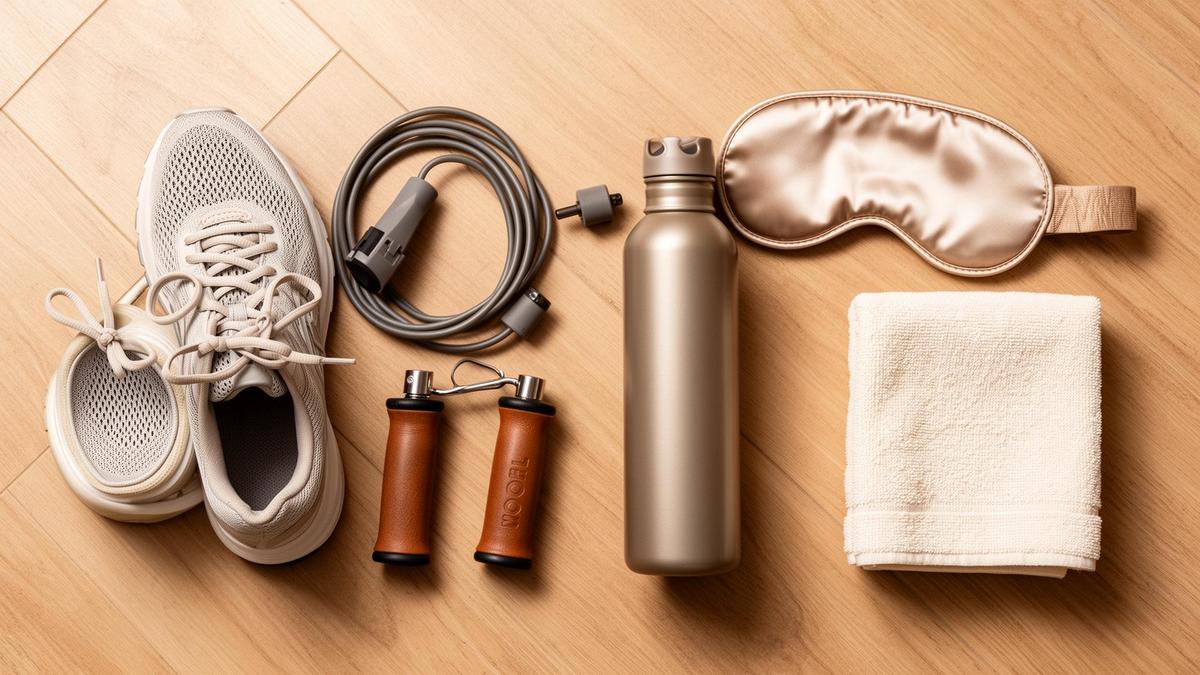
Performance gear
- Race shoes and training shoes
- Socks, grips, belt, sleeves, tape
- Jump rope, watch and charger, heart-rate strap
- Race kit, an extra outfit, warm layers, a towel
Nutrition
- Protein options and familiar carbs
- Electrolytes, shaker bottle, water bottle
- A safe breakfast, salt packets if you use them, simple snacks
Recovery
- Eye mask, ear plugs, travel pillow
- Compression socks if they help you
- Lacrosse ball, mini band, a small mobility tool
- Magnesium if it is already part of your routine, plus your usual sleep-routine items
Admin and logistics
- ID, registration, heat time, venue address
- Transport plan, emergency contact, charger
- A backup payment card
The airport and road-trip survival guide
At the airport: carry an empty bottle and fill it after security, walk the terminals, do not sit at the gate for two hours straight, pack your own food, use electrolytes, choose simple meals, go easy on alcohol, and set your watch to destination time if you are changing zones.
On a road trip: stop every 90 to 120 minutes for a 5-minute movement break, pack a cooler so you are not at the mercy of gas-station snacks, hydrate steadily, avoid mindless grazing, and aim to arrive with enough time to decompress before you have to do anything that matters.
The travel performance mistakes athletes keep making
- Testing new supplements on race week
- Eating random spicy or heavy meals before competition
- Under-drinking because bathrooms are inconvenient
- Walking all day sightseeing before race day
- Relying entirely on airport food
- Training too hard right after arrival
- Skipping the arrival shakeout
- Staying up late because "it is just one night"
- Forgetting electrolytes
- Not packing backup gear
- Letting stress make every decision for you
Three sample travel-day routines
A. HYROX race travel day
Morning: a protein-forward breakfast, hydration with electrolytes, and an easy walk. During travel: water bottle in hand, movement every 90 minutes, simple snacks. On arrival: a 20-minute shakeout, a familiar dinner, and an early night.
B. CrossFit competition travel day
Morning: your normal breakfast, a gear check, and some mobility. During travel: fluids, carbs and protein, and walking. On arrival: check event logistics, do short movement prep, and lock in your food plan for the next day.
C. Life athlete work trip
Morning: a 10-minute movement reset, protein at breakfast, water before coffee. During the day: walk after meals, hydrate, keep lunch simple. Evening: a short mobility reset, a screen cut-off, and your normal sleep routine.
The 12-minute "Arrive Alive" reset
This is the single most useful thing you can do after a long travel day. It is not a workout. It is a signal to your body that you are safe, awake, mobile, and ready.
Want a follow-along version you can run anywhere? This standing, equipment-free flow is exactly the kind of easy shakeout we are talking about. No mat, no gear, no excuses, even in a hotel room or a quiet airport corner.
Video credit
Mobility by Julia Reppel(opens in a new tab)
A standing, equipment-free mobility flow you can run in a hotel room, beside the car, or in a quiet airport corner. It is the kind of gentle arrival shakeout we coach: never a test, just enough to tell a travel-stiff body it is safe to move well again.
Nutrition strategy while travelling
Travel nutrition is not about being perfect. It is about removing the obvious landmines. Anchor each meal with protein, keep carbs around your competition or training, keep fibre consistent rather than extreme, and stay on top of sodium and electrolytes. Avoid new foods before a race, choose the simplest reliable option at the airport, raid the hotel breakfast for eggs and fruit, and consider a quick grocery stop for safe snacks. Keep caffeine in your morning window, and treat alcohol as a recovery and sleep cost.
Supplements and travel support
Keep this conservative and simple. The supplements worth considering on the road are the ones already in your routine: electrolytes, protein powder, creatine if you already take it, magnesium if you already tolerate it, and caffeine if you already use it. Ginger or peppermint tea can settle digestion. Melatonin is sometimes used for time-zone shifts, but only with caution and based on your own tolerance. Vitamin D only if it is already part of your routine.
The non-negotiable rule: do not try new supplements on race week or competition travel. This is general education, not medical advice. Anyone with medical conditions, medications, or specific health concerns should speak with a qualified health professional first.
The return-home strategy
The post-trip crash is real, and it is where a lot of momentum dies. Do not punish yourself with a brutal "make up for it" workout. Use your first session back as a reset: easy movement, good positions, nothing heroic. Hydrate, sleep, get back to your normal meals, walk, do some mobility, and return to training progressively. Treat travel as a planned part of your training year, not a disruption to apologize for.
The bottom line
You do not need a perfect travel routine. You need a repeatable one. Protect the basics (sleep, hydration, movement, food, mobility, calm, and confidence) and your fitness has a much better chance of showing up when it matters. The athletes who race well after travelling are not the ones who never get tired. They are the ones who protected the systems that let their training speak.
Travelling for HYROX, CrossFit, or your next life adventure? Build your plan before you pack. And if you are in Vancouver and want to train for HYROX, CrossFit, or life with smart coaching and a strong community, come try 3 free classes at CrossFit BC. We help people build fitness that travels well.