Everything You Wanted to Know About DOMS but Were Too Proud to Admit
Why soreness arrives late, what actually helps, when you can train, and when walking like a baby giraffe deserves more attention.
Let me tell you about the day I lied to everyone.
I had just finished a heavy squat session, felt fantastic, and told anyone who would listen that I "actually felt pretty good." I was practically glowing. Roughly twenty-four hours later I attempted to lower myself onto a toilet and produced a sound I can only describe as a wounded bagpipe. The descent required the control of a construction crane and the dignity of none.
That, my friend, is DOMS. And if you are reading this because stairs have recently declared war on you, welcome. You are in excellent, slightly wobbly company.
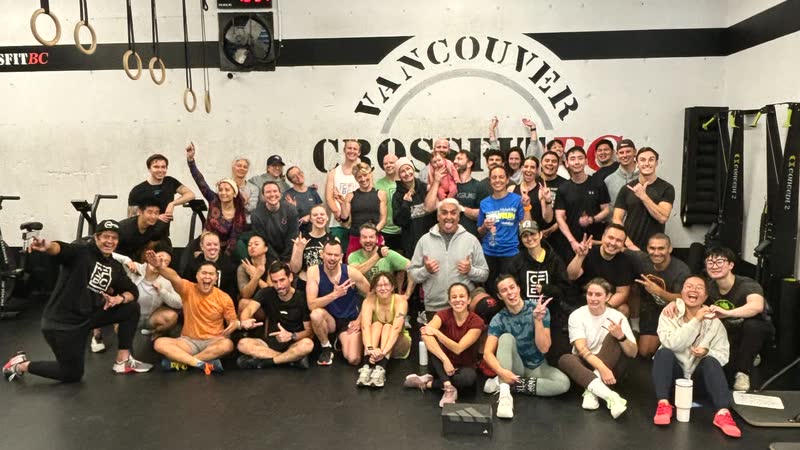
I am Coach Moose (my mum still calls me Dai), and I own and coach at CrossFit BC here in Vancouver. I have spent decades training, coaching real humans, making most of the recovery mistakes available, and laughing about nearly all of them. This is the honest, occasionally undignified guide to delayed onset muscle soreness. The science is real. The stair jokes are also real.
The quick answer
DOMS stands for delayed onset muscle soreness. It is the tenderness and stiffness that often develops after unfamiliar or demanding exercise, especially movements with a strong lowering (eccentric) component. It usually appears in the hours and day after a workout rather than during it, and it settles as your body recovers and adapts.
What is DOMS, really?
DOMS is the muscle soreness that shows up after you challenge a muscle in a way it is not used to. It is a normal response to training, not a sign that something is broken.
Here is the plain-language version. When you ask a muscle to do something new, harder, or longer than usual, you create tiny amounts of disruption inside the muscle fibres. Your body responds with a repair and inflammation process, and part of that process makes the area tender and stiff for a while. As the muscle recovers, it also adapts, which is the entire point of training.
Scientific translation: delayed onset muscle soreness. Coach Moose translation: yesterday's lunges have filed a formal complaint, and they would like to be heard.
Why does DOMS happen?
DOMS is mostly driven by two things: doing something unfamiliar, and doing a lot of eccentric work. Eccentric simply means the lengthening or lowering part of a movement, like the way down in a squat, the lowering of a deadlift, the descent of a push-up, or the controlled part of a chin-up.
That is why the usual suspects are so memorable: squats, deadlifts, lunges, pull-ups, downhill running, and the first session back after time off. They all load the muscle while it lengthens, which creates more of the microscopic disruption that leads to soreness.
Think of it like breaking in a new pair of boots. The first few walks leave a mark. Do it regularly and your feet, and the boots, adapt. Your muscles work the same way, minus the blisters.
Does lactic acid cause DOMS?
No. This is the myth that refuses to die. Lactate clears from your muscles within an hour or two of finishing exercise, long before your soreness peaks a day or two later. Blaming lactic acid for DOMS is like blaming last week's rain for today's flat tire. The timing simply does not line up.
Why does soreness arrive late?
Because the repair and inflammation response that makes you sore builds up over time. You often feel fine right after training, mildly stiff that evening, and then meaningfully sore the next morning. This is completely normal, and it is why so many of us confidently announce that we feel great, only to be humbled by a staircase the following day.
Everyone is a little different, so treat this timeline as a general pattern rather than a promise.
How long does DOMS last?
Ordinary DOMS usually peaks around 24 to 72 hours after training and largely clears within a few days to about a week. If soreness keeps getting worse instead of better, or arrives with other symptoms, that is a different conversation, and we will get to it below.
Does being sore mean I had a good workout?
Not necessarily. Soreness is a poor scorecard for workout quality. It mostly reflects how new or eccentric the session was, not how effective it was.
You can have a brilliant, productive workout and be barely sore. You can also be wrecked for three days by something that did very little for your fitness other than teach you a lesson about ego. As you adapt to a program, you often get less sore even though the program keeps working. That is a good sign, not a problem to fix.
The goal of training is not to become sore enough to require a support team. The goal is to become more capable. Progress lives in consistency, technique, sensible progression, and recovery, not in how theatrically you walk on Tuesday.
Is DOMS good, bad, or just annoying?
Mostly, it is just annoying. A bit of soreness after a new stimulus is a normal, harmless part of training. It is not a badge of honour, it is not proof of toughness, and it is definitely not evidence that a coach successfully "destroyed" anyone.
At CrossFit BC, our whole philosophy runs against the destroy-them approach. A workout should be scaled to the person in front of us so they can recover and come back and train again soon. The best dose of training is the one you can recover from and repeat. Preparing people beats punishing them, every single time.
Can I train when I am sore?
Usually yes, if the soreness is mild and your movement is normal. The trick is to match your plan to how you actually feel, warm up properly, and be honest with your coach. Use the traffic light below.
Can I train today?
The DOMS Traffic Light
Match how you feel to a light. When in doubt, drop a level and talk to your coach. This is general guidance, not a diagnosis.
Mild and improving. You are good to train.
What it looks like
- Mild stiffness or tenderness
- You can move normally
- Symptoms ease off during the warm-up
What to do
- Train, and warm up gradually
- Reduce load or volume where it makes sense
- Tell your coach how you feel
- Choose quality movement over ego
Moderate. Proceed, but adjust the plan.
What it looks like
- Moderate soreness or altered movement
- Noticeably reduced range of motion
- Poor sleep or unusual fatigue
- You are just not sure
What to do
- Tell your coach before class
- Use lighter loads and less eccentric volume
- Swap in easier aerobic work or a different muscle group
- Stop if movement quality falls apart
Stop. This needs attention, not another workout.
What it looks like
- Sharp pain, or pain around a joint
- Major swelling or significant weakness
- Dark or cola-coloured urine
- Fever, confusion, or feeling seriously unwell
What to do
- Do not try to sweat it out
- Do not stretch or foam roll severe symptoms away
- Seek appropriate professional or urgent medical guidance
Normal sore, injured sore, or please-stop-Googling-and-get-help sore?
This is the section to read twice. Most soreness is ordinary DOMS. Some is not. Knowing the difference keeps you training for decades instead of guessing your way into trouble.
Typical DOMS tends to be diffuse tenderness across the muscles you trained, some stiffness, a temporary dip in range of motion, and discomfort that showed up after training rather than in one specific painful moment. It gradually gets better.
Possible injury looks different: sudden or sharp pain, pain focused around a joint, a pop or snap or a clear moment it happened, major swelling or bruising, a feeling of instability, pain that keeps getting worse, or not being able to use the area normally.
Seek urgent medical guidance if you have severe or rapidly increasing swelling, extreme weakness, pain far beyond expected soreness, dark or cola-coloured urine, a big drop in how much you are urinating, or fever, confusion, faintness, or feeling seriously unwell. These can be signs of a medical problem such as rhabdomyolysis, and they need proper assessment, not a stretch and a second workout.
Please do not try to self-treat severe symptoms with stretching, another session, or more late-night internet research. If something feels wrong, get it checked. Being reassured by a professional is a good outcome, not a wasted trip.
Not sure which camp you are in? Run through this quick self-check. It is educational only and cannot diagnose anything, but it will point you in a sensible direction.
Self-check
How Sore Are You?
Answer honestly. This is an educational guide, not a diagnosis tool.
Answer the questions to see your result.
This is a quick educational self-check, not a diagnosis. When symptoms are severe or unusual, skip the quiz and get proper help.
This tool is general education only. It cannot diagnose an injury. If you are worried, or symptoms are severe or getting worse, contact a qualified healthcare professional.
What actually helps DOMS? The recovery toolbox
Here is the honest truth that no product wants to print on its packaging: most recovery tools help you feel better rather than dramatically speed up muscle repair. Both of those things are worth something. Feeling better means you move more, sleep better, and train again sooner. Just keep your expectations calibrated.
The scorecard below rates the usual options. Notice how the free, boring foundations sit at the top, and the expensive gadgets sit lower. That is not an accident.
The recovery toolbox
What Actually Helps DOMS
An honest scorecard. Most of these help you feel better. Very few speed up the actual repair. Both facts can be true at once.
Sleep
Strong foundation- May help
- Supports recovery, mood, and how sore you feel
- Best use
- Every night, especially after hard sessions
- Do not expect
- One good night to erase two days of soreness
- Coach Moose verdict
- The single most underrated recovery tool. Free, and it works.
Food and protein
Strong foundation- May help
- Gives your body the materials to repair and adapt
- Best use
- Enough total energy and regular protein through the day
- Do not expect
- A magic food that deletes soreness
- Coach Moose verdict
- Eat enough, spread your protein, include fruit and veg. Boring and effective.
Easy movement
Likely useful- May help
- Eases stiffness and helps you feel better short term
- Best use
- Walking, easy cycling, gentle rowing on sore days
- Do not expect
- It to speed up muscle repair dramatically
- Coach Moose verdict
- Move gently. It should feel restorative, not like a secret workout.
Massage
Temporary relief- May help
- Can reduce soreness and feels good in the short term
- Best use
- A day or two after a hard, unfamiliar session
- Do not expect
- To flush out toxins or repair tissue faster
- Coach Moose verdict
- Pleasant and helpful for symptoms. Enjoy it without over-claiming.
Foam rolling
Temporary relief- May help
- Modest short-term relief and improved comfort
- Best use
- Moderate pressure, slow passes, a few minutes
- Do not expect
- More pain to mean more benefit
- Coach Moose verdict
- Useful, not an interrogation. The foam roller is not a confession booth.
Massage gun
Temporary relief- May help
- Similar short-term relief to hands-on massage
- Best use
- Brief, moderate use on muscle, not on joints
- Do not expect
- It to fix anything on the highest setting
- Coach Moose verdict
- Fine tool. Avoid injured tissue, joints, swelling, and numb areas.
Stretching
Evidence is mixed- May help
- Gentle mobility can feel good and aid movement
- Best use
- Easy, comfortable range on sore days
- Do not expect
- Aggressive stretching to cure DOMS
- Coach Moose verdict
- Nice for how you feel. Not a guaranteed soreness fix.
Heat
Temporary relief- May help
- Can help you feel looser and more comfortable
- Best use
- Warm shower or bath when you feel stiff
- Do not expect
- It to change the underlying recovery process
- Coach Moose verdict
- Comforting. Use it because it feels good.
Cold-water immersion
Evidence is mixed- May help
- May reduce soreness in the short term
- Best use
- When feeling better soon matters more than max adaptation
- Do not expect
- It to be mandatory, or ideal right after strength work
- Coach Moose verdict
- Optional. Regular cold right after lifting may blunt some gains.
Compression garments
Temper expectations- May help
- Small perceived reduction in soreness for some people
- Best use
- Travel or long days on your feet after training
- Do not expect
- A big performance or repair effect
- Coach Moose verdict
- Low risk, modest payoff. Use if you like how they feel.
Sauna
Temper expectations- May help
- Feels relaxing and comfortable
- Best use
- General relaxation and heat exposure you enjoy
- Do not expect
- A proven DOMS cure
- Coach Moose verdict
- Pleasant. Claim comfort, not miracles. Hydrate and do not overdo it.
Supplements
Evidence is mixed- May help
- A few (creatine, omega-3, tart cherry) have modest support
- Best use
- On top of sleep and food, never instead of them
- Do not expect
- Any pill to eliminate soreness
- Coach Moose verdict
- Optional add-ons. Skip anything unregulated. Ask a professional.
Hydration
Temper expectations- May help
- Matters for health and performance generally
- Best use
- Drink to thirst and needs across the day
- Do not expect
- Extra water to rinse soreness out of your quads
- Coach Moose verdict
- Stay normally hydrated. Do not expect it to fix DOMS.
Anti-inflammatory meds
Temper expectations- May help
- Can mask soreness symptoms
- Best use
- Only with guidance from a pharmacist or clinician
- Do not expect
- Routine use to be free of downsides
- Coach Moose verdict
- Not a default. Talk to a professional about suitability and dosing.
A big night of drinking
Mostly marketing- May help
- Nothing useful for recovery
- Best use
- Not for recovery
- Do not expect
- It to help sleep, hydration, or repair
- Coach Moose verdict
- Your muscles have never looked at six pints and said, the materials have arrived.
Foam rolling: helpful tool or PVC pipe-based interrogation?
Foam rolling can give modest short-term relief and help you feel looser. Use moderate pressure, roll slowly, and keep it brief. More pain is not more benefit. The foam roller is not a confession booth. You do not have to reveal every secret while using it.
A quick word on cold plunges, supplements, and pain medication
Cold-water immersion may reduce soreness in the short term, which is genuinely useful before a competition or a big day. The trade-off is that using cold regularly right after strength training may blunt some of the muscle-building adaptations you are working for. So it is a tool with a time and place, not a mandatory ritual.
On supplements, a few have modest support for soreness or recovery, such as creatine, omega-3 fatty acids, and tart cherry. None of them erase DOMS, and none of them replace sleep, food, sensible programming, or professional advice. Skip anything unregulated or dodgy.
On anti-inflammatory medication, please be careful. Routinely taking painkillers to mask soreness has limitations and potential downsides, and it can hide signals your body is trying to send. Talk to a pharmacist or your doctor about what is suitable for you, your health, and any other medications, rather than treating it as a default.
And on the classic recovery beverage: a big night of drinking will not help your sleep, hydration, or repair. Your muscles have never looked at six pints and said, excellent, the building materials have arrived.
The M.O.O.S.E. Recovery Check
When you are sore, you do not need a 14-step protocol. You need a simple plan you will actually follow over the next day or two. Here is mine.
- M is for Move gently. A walk, an easy spin, or a few minutes of comfortable mobility. Restorative, not a secret second workout.
- O is for Observe the symptoms. Is this ordinary soreness that is easing, or something sharper, swollen, or getting worse? Notice honestly.
- O is for Organize food, fluids, and sleep. Eat a proper meal with protein, drink to thirst, and protect your sleep tonight. This is where most recovery actually happens.
- S is for Scale the next session. Warm up well, reassess, then adjust loads, volume, and eccentric work to match how you feel.
- E is for Escalate unusual symptoms. Red flags go to a professional, not to another workout or a foam roller.
Concretely, that looks like this. Tonight: eat well, drink to thirst, take a short walk, wind down, and prioritize sleep. Tomorrow morning: assess how you feel, do some gentle movement, and resist turning a mobility session into competitive yoga. At your next class: arrive early, tell your coach exactly what is sore, warm up, reassess, and scale intelligently with a focus on movement quality.
Print & keep
Want the traffic light, recovery fundamentals, warning signs, and next-session checklist on one page? Grab the printable version and stick it on the fridge.
How to be less wrecked next time
You cannot make yourself completely immune to DOMS, and you would not want to, but you can absolutely stop ambushing yourself. The single biggest lever is progressive exposure: introduce new or harder work gradually instead of in one heroic spike.
Practical ways to do that:
- Avoid enormous jumps in volume or intensity in a single session.
- Scale movements to your current level and add load over weeks, not minutes.
- When returning after time off, restart gently for a week or two rather than picking up where you left off.
- Ease into eccentric-heavy sessions if you know they are coming.
- Warm up properly so your first working set is not also your first real movement of the day.
- Leave a few reps in reserve, especially early on. You do not have to prove anything on day one.
- Tell your coach your training history so we can pitch the session correctly.
The reason this works is the repeated-bout effect. After you do a session once, your body adapts, and the same session causes far less soreness the next time. In other words, your body keeps notes. Fortunately, unlike most of us, it can find them again later.
DOMS myths, cleared up quickly
- Myth: Lactic acid causes soreness two days later. It does not. Lactate clears within a couple of hours.
- Myth: More soreness means more gains. No. Soreness is not a measure of progress.
- Myth: You need to stretch the pain away. Gentle mobility can feel nice, but aggressive stretching is not a cure.
- Myth: Sweating more will flush it out. There is nothing to flush. This is not how muscles work.
- Myth: Only beginners get DOMS. Anyone can get sore from something new or eccentric-heavy, at any level.
- Myth: Fit people never get sore. They do, especially after novel work. They are just better at managing it.
- Myth: You must rest completely until every ache is gone. Gentle movement usually helps mild soreness.
- Myth: A supplement can eliminate DOMS. No pill removes soreness. A few may help modestly.
- Myth: If you can tolerate the pain, the movement must be safe. Pain tolerance is not a safety check. Technique and load are.
Embarrassing DOMS questions people are too proud to ask
You are not weird for wondering about these. You are just honest. Here are quick answers to the questions people quietly Google after leg day.
Why am I more sore on the second day? Because DOMS is delayed, and the soreness tends to build over the first 24 to 72 hours.
Why do my legs shake when I sit down? Your fatigued muscles are working harder to control the slow lowering, which is exactly what leg day trains.
Why does sneezing hurt after ab work? A sneeze sharply contracts sore abdominal muscles. Uncomfortable, normal.
Why is only one side sore? Usually because one side did more work. Mild is normal, sharp joint pain is not.
Can DOMS make me weaker for a bit? Yes, a temporary strength dip is normal while you recover.
Why am I sore after an easy-feeling workout? Soreness tracks novelty and lowering load more than how hard it felt.
How long is too long? If it keeps getting worse, or comes with swelling, weakness, dark urine, or feeling unwell, get it checked.
There are plenty more of these answered in the frequently asked questions further down the page. If yours is not there, ask a coach. We have heard them all, usually while someone was walking sideways.
Send this to a friend
Know someone currently lowering themselves onto furniture with the control of a construction crane? Send them this guide. It is the kindest thing you can do for a person one day after their first leg day.
Coach Moose's final word
Soreness happens. It does not define the quality of your workout, and it is not the price of admission to fitness. The skill is to listen to your body without panicking, scale without shame, keep moving when it is appropriate, recover like it actually matters, and ask a coach instead of guessing.
You do not need to prove how tough you are by hiding your soreness. Tell your coach what is sore. Adjust the plan. Keep showing up. Fitness is built through hundreds of sensible decisions, not one heroic attempt to descend a staircase without using the railing.
And if you do end up using the handrail as a full upper-body pulling exercise on the way down, that is fine. We have all been there. Preferably not in public. Definitely in public.
Still unsure whether you should train today?
Come talk to a coach
At CrossFit BC in Olympic Village, Vancouver, we modify the workout to meet the person in front of us. Whether you are into CrossFit, HYROX and hybrid training, or just getting started, we will scale it so you can recover and come back. Try three coached classes free and see what intelligent training feels like.
No card required. No experience needed. No pressure.
Not sure whether CrossFit, HYROX, mobility, or another starting point fits you? Take the 60-second program quiz. And if you are already part of the CFBC crew, tell your coach what is sore before class. We cannot read minds, although after enough squat days we can usually recognize the walk.
Want more like this? Keep reading our take on recovery for CrossFit athletes, why recovery is becoming more important than workouts, and the HYROX recovery guide. You can also meet Coach Moose and the team, or start with our Foundations on-ramp.
Sources and further reading
This article combines current sports-medicine consensus with coaching experience. For the underlying evidence on what DOMS is, why lactic acid is not the cause, the repeated-bout effect, and the mixed evidence for recovery methods, these are good, authoritative starting points:
- Cheung, Hume & Maxwell, Delayed Onset Muscle Soreness: Treatment Strategies and Performance Factors (Sports Medicine)
- NHS, How to ease muscle aches after exercise
- Cleveland Clinic, Rhabdomyolysis (warning signs and when to seek care)
- Cochrane Review, Stretching to prevent or reduce muscle soreness after exercise
- Cochrane Review, Cold-water immersion for preventing and treating muscle soreness
A note on safety: this article is general education, not individualized medical advice, and it does not replace assessment by a qualified healthcare professional. If you are dealing with pain, an injury, a health condition, or any of the red-flag symptoms above, please speak with an appropriate professional.