
More Running Won't Save Your HYROX Race
HYROX isn't a running race with stations bolted on. It's a strength-endurance race that rewards running well after the fatigue hits.
You signed up for your first HYROX, looked at the eight one-kilometre runs, and did the logical thing: you started running more. Smart instinct, incomplete plan. Because here is what the finish line teaches almost everyone the hard way. HYROX is not a running race with some stations bolted on. It is a strength-endurance race that happens to include a lot of running, and more running alone will not save your time.
If you are brand new to the race, our primer on what HYROX actually is, and why everyone's training for it, breaks down the 8 runs and 8 stations before you build your plan.
This is part of The Coach's Fix, our series on the training mistakes we correct most often. Today we look at the most common one in HYROX prep: training the runs and neglecting the engine that carries you between them.

The common mistake
The runs are the most visible part of HYROX, so they get all the attention. People build their whole plan around running volume and pace, then show up and discover that their fresh-legs 5k pace has almost nothing to do with their race. The clock does not care how fast you run rested. It cares how fast you run after a sled push has turned your quads to concrete.
The opposite mistake is just as common from the CrossFit side. Strong athletes assume their intensity will carry them, then blow up around station four when the sustained aerobic demand they never trained finally sends the bill. Both athletes made the same error: they trained one quality and ignored the other.
What is actually happening
HYROX is eight one-kilometre runs alternated with eight functional stations: SkiErg, sled push, sled pull, burpee broad jumps, rowing, farmers carry, sandbag lunges, and wall balls. The runs are real, but they are bookended by work that systematically destroys your ability to run well. That is the whole game. The athletes who do well are not the fastest runners or the strongest lifters. They are the ones who can keep moving well after fatigue shows up.
This is the concept of compromised running, and it is the single most important idea in HYROX prep. Your fresh mile means little. Your mile after a heavy sled and a set of lunges means everything. Add in grip that fades through the farmers carry, a posterior chain that has to absorb wall balls under fatigue, and the simple need to repeat hard efforts without falling apart, and you have a race that rewards a complete athlete, not a specialist.
What our coaches look for
When we assess someone for HYROX, we are not just timing their run. We are looking for where they fall apart:
- Does pace hold after a station? We watch the first 200 metres of a run off a sled. If it falls off a cliff, that is compromised running, and it is trainable.
- Does grip survive the carries? Farmers carry and sled pull tax the grip. When it goes, everything downstream suffers.
- Do wall balls hold up under fatigue? Fresh wall balls are easy. Wall balls at the end of a race, with a tired posterior chain, are where times are lost.
- Is there an aerobic base, or just intensity? CrossFit athletes often have a big top end and a thin base. The base is what lets you hold pace for an hour.
- Is there strength endurance, or just running fitness? Runners often have the base and none of the load tolerance the stations require.
What to do instead
Train the race you are actually entering. That means building both an aerobic base and strength endurance, and crucially, practising them together so your body learns to run on tired legs. The simplest way to find your own weak link is to rehearse the pattern. Here is a balance test we use with members.
Video credit
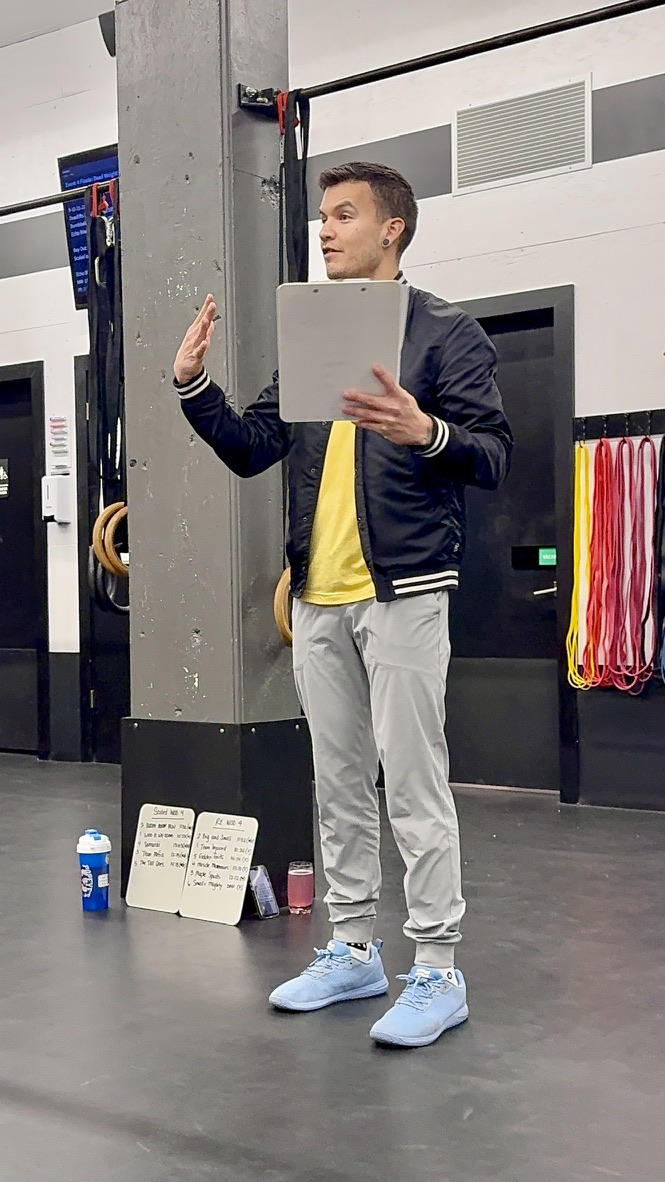
HYROX coach Rich Ryan shows running sessions built for the race, including running under fatigue rather than just logging fresh miles.
What the test reveals is your limiter. If your run pace collapses after the sled, you need more compromised running and lower-body strength endurance. If your grip dies in the carry, you need grip and posterior-chain work. If the wall balls fall apart, your legs need more capacity under fatigue. Train the weak link, not the part you already enjoy.
How to use this in training
Build your week around three ingredients: one or two aerobic base sessions to hold pace for the long haul, strength endurance work for the stations, and at least one session that combines running with stations so you rehearse compromised running on purpose. This is exactly the logic behind hybrid training, and it is why a structured HYROX program beats simply running more. If you love the running side, our run club is a great way to build the base without neglecting the rest.
Beginner modifications
New to this? The test scales cleanly. Shorten the runs to 400 to 600 metres. Use a lighter sled or a brisk loaded march. Carry lighter dumbbells for shorter distances. Swap wall balls for air squats or a lighter ball to a lower target. The point is not to crush yourself, it is to find your weak link and start there. Everyone has one, including experienced athletes, and finding it early is a gift, not a failure.
You absolutely do not need to be race-ready to start training for HYROX. Most of our members began as either a runner who could not lift or a lifter who could not run. Both got there.
When to get coached
HYROX prep is where good coaching pays for itself, because the limiter is often not the thing you would guess. If you want a plan built around your actual weak link, come try a few free classes and talk to us, or dig into our HYROX hub and the full list of programs. We will help you train the race you are actually entering.
A quick note from the coaching team: this is educational content, not medical advice. If you have pain, a current injury, or a medical concern, see a qualified professional before adding load or new ranges of motion. Coaching is about building you up, never pushing you through a warning sign.
Want help figuring out what your body actually needs?
Start with 3 free classes at CrossFit BC. Meet the coaches, experience the community, and learn how to train with purpose, whether your goal is strength, mobility, HYROX, CrossFit, or simply feeling better in your body again.
Start with 3 Free Classes Explore Programs