Most People Overcomplicate Mobility. Start With These 3 Movement Patterns Instead.
Forget the 27-minute mobility video you'll never finish. The athletes who actually move well don't have a longer routine. They have a shorter one they actually do.
Pull up YouTube and search "mobility routine." You'll get a video that's 27 minutes long, requires four pieces of equipment, and asks you to roll out muscles you can't pronounce. You'll watch the first three minutes, save it for "later," and never open it again. We've all done it.
Here's what we've learned coaching thousands of sessions on our floor: the people who move the best aren't doing some elaborate hour-long routine. They're doing a few smart things, almost every day, and stacking the wins. That's it. The whole secret.
This article is our take on what those few smart things are. Three movement patterns. Five to ten minutes. Real carryover to your squat, your run, your morning, your sixties.
Why most mobility routines fail
Most routines aren't bad. They're just unrealistic. Here's what we see go wrong, in roughly the order it happens:
- They're too long. A 30-minute mobility session sounds great on Sunday and impossible on Wednesday. Anything you won't do on a busy day isn't really your routine.
- They're all stretching, no loading. Passive stretching gives you a temporary window of range. If you never load it, your nervous system politely takes it back.
- They skip control. Range without control is just looseness. The goal isn't to be more bendy. The goal is to own the positions you get into.
- They aren't consistent. A perfect routine done twice a month loses to a decent routine done five times a week. Every time.
If you've started and stopped a mobility plan three times this year, you don't have a discipline problem. You have a design problem.
What mobility actually needs
Strip away the marketing and mobility comes down to five ingredients. A useful routine touches all of them:
Stretching gives you ingredient one. That's it. The rest comes from how you train. Which is exactly why three movement patterns, done well, beat a list of fifteen exercises every time.
The 3 movement patterns that matter most
These are the patterns we come back to with new members, returning members, hybrid athletes, HYROX racers, and the longevity-first crowd in their sixties and seventies. They cover the joints and shapes you actually use, and they hit all five ingredients above.
1. The squat pattern

The deep squat is the single most underused mobility tool most adults have access to. It opens hips, ankles, and knees. It teaches your spine to stay tall under load. It puts your nervous system in a position it doesn't visit anymore once you stop being a kid.
What we use on the floor:
- Supported squat hold, sink to the bottom holding onto a rig upright or a heavy kettlebell handle. Sit there for 30 to 60 seconds, breathing slowly. The support lets you relax into range you can't yet own unsupported.
- Prying squat, same bottom position, but actively rocking side to side and pushing knees out with the elbows. This adds gentle exploration through the hips and ankles.
- Paused goblet squat, hold a kettlebell at your chest, descend slowly, pause for two to three seconds at the bottom, stand up. This is where strength meets the new range. Three sets of five does more than ten minutes of passive stretching.
Why it carries over: getting up off the floor, lifting a child, picking up a bag, surviving a long flight, every barbell movement we coach. The squat is life, basically.
2. Controlled joint circles
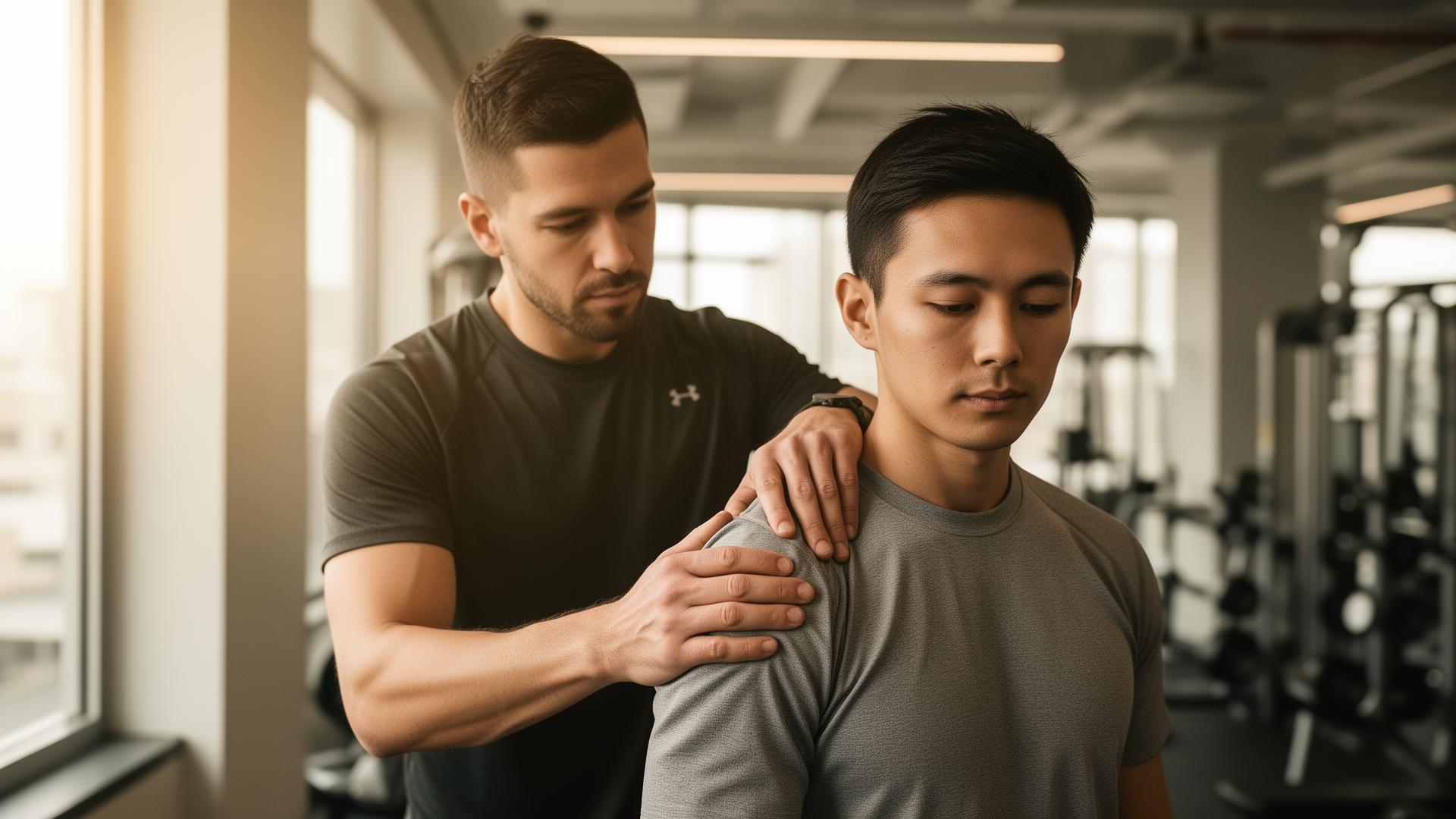
You'll see "CARs" thrown around online, controlled articular rotations. It sounds technical. The plain-English version: take a joint, move it through its biggest possible circle, slowly, without letting anything else move. That's it.
Why it works is almost boring: your nervous system maps the ranges you use. The ranges you don't use, it forgets about. Joint circles are how you remind your brain that your shoulders, hips, and ankles still have all those options.
What we use on the floor:
- Hip circles, stand tall, lift one knee to hip height, draw a big circle out, around, and back. Five each direction, each leg. Move slow enough that your standing leg has to actually balance.
- Shoulder circles, arm extended, draw the biggest circle you can with your fingertips. Keep your ribs down and your spine still. Five each way, each arm.
- Ankle circles, one foot off the floor, draw slow letters with your big toe. Yes, it looks goofy. Yes, your ankles will thank you.
Two minutes total. Done daily. Almost no one is doing this, which is exactly why it works so well.
3. Balance and single-leg hinge
Here's the thing nobody talks about: most adults haven't trained balance since they were ten. Then one day in their fifties they trip on a curb and the whole story changes. Balance is mobility's quietest, most important ingredient, and it's the first one we lose.
Single-leg work is also where mobility gets honest. You can hide a tight hip in a back squat. You cannot hide it in a single-leg RDL. The leg either works through range or it doesn't.
What we use on the floor:
- Supported single-leg balance reach, fingertips on a wall or rig, lift one leg, slowly reach the free leg forward, side, and back without losing your standing knee. Five reaches each direction, each leg.
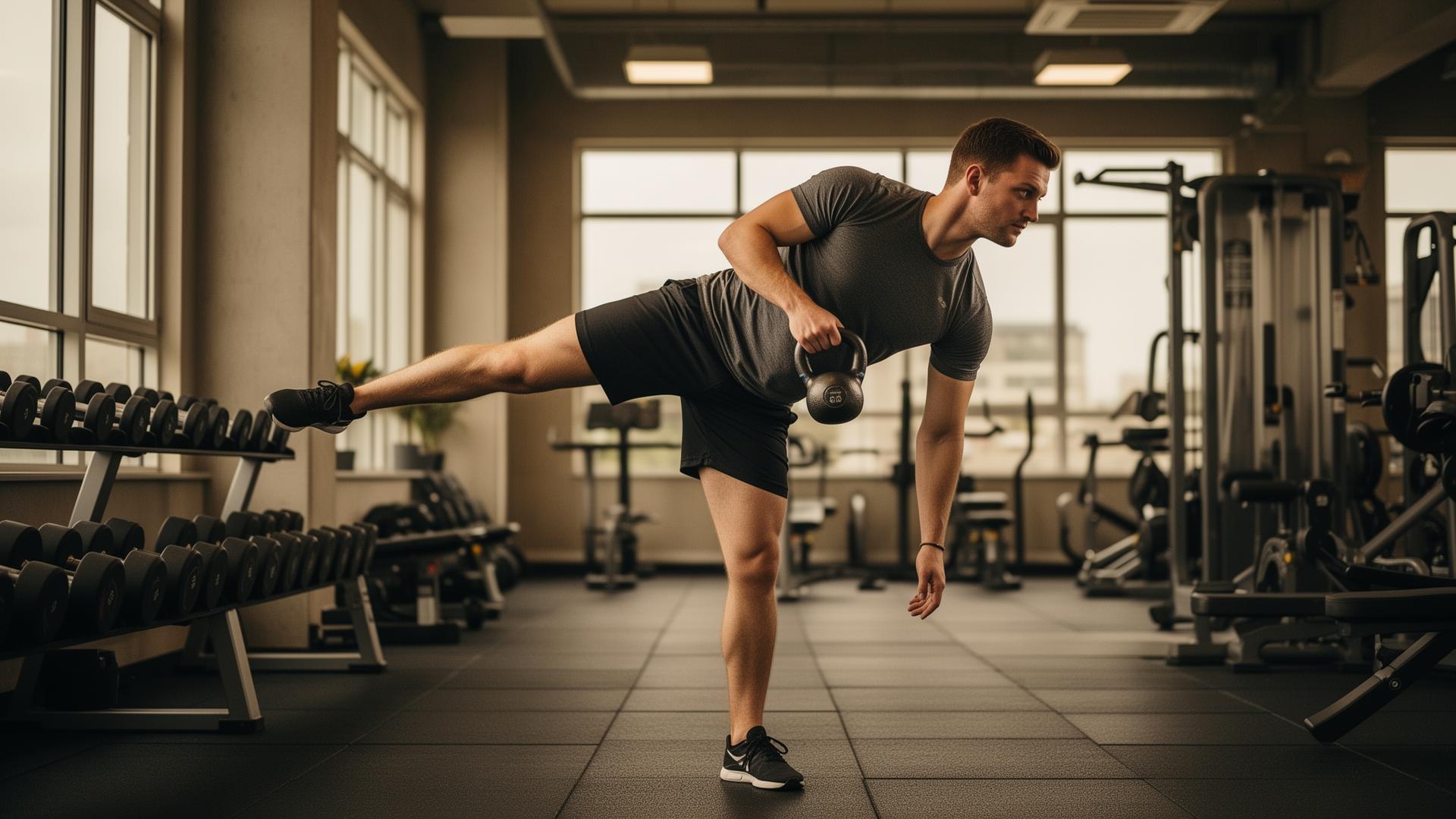
- Single-leg RDL, light kettlebell in one hand, hinge at the standing hip, free leg extending behind you, flat back. Slow on the way down. This is your hamstring, glute, ankle, and balance system in one rep.
- High lunge to knee drive, step into a long lunge, drive the back knee forward and up to your chest without putting the foot down, return. Five each side. Builds hip mobility and balance under control.
Why it carries over: hiking, running, stairs, sport, recovery from minor stumbles, aging well. Single-leg control is the difference between feeling athletic at 40 and feeling fragile at 70.
How to use them
Two formats. Pick the one you'll actually do this week.
The 5-minute daily version
- 60 seconds, supported squat hold, breathing slow
- 60 seconds, hip circles, both legs
- 60 seconds, shoulder circles, both arms
- 60 seconds, ankle circles, both feet
- 60 seconds, single-leg balance reach, both legs
That's it. Do it before training, while the coffee brews, or before bed. The point isn't intensity. The point is showing up.
The 10-minute three-times-a-week version
- 2 minutes, prying squat, exploring the bottom position
- 2 minutes, full joint circle flow (hips, shoulders, ankles, both sides)
- 3 sets of 5, paused goblet squats, 2-second pause at the bottom
- 3 sets of 5 each side, single-leg RDL with a light kettlebell
- 1 minute, supported squat hold, breathing
Where to slot it: ideally as the back end of your warm-up before classes or training. Your hips are warm, you're already in gym mode, and you stack the habit onto something you already do. The athletes who treat this like a separate "mobility day" usually skip the mobility day. The ones who attach it to training do it forever.
Common mistakes
- Rushing. Joint circles done fast become arm flailing. Slow them down until your standing leg has to actually balance.
- Chasing sensation over control. "I felt it" is not the goal. "I owned it" is the goal. A position you can move slowly into and out of beats a position you can flop into.
- Doing too much. Five minutes done daily for a year will change your body. Forty-five minutes done twice will not.
- Forcing range. If your body is bracing, you're past your useful range. Back off, breathe, earn it.
- Treating mobility like punishment. If you only mobilize when something hurts, you've turned a maintenance habit into a stress habit. Do it because you train, not because you're broken.
The bottom line
You don't need fifteen exercises. You don't need a rumble roller, a peanut, a lacrosse ball, and a band collection. You need three patterns, five honest minutes, and the willingness to do them when you don't feel like it.
Mobility isn't a project. It isn't a personality trait. It's a quiet daily habit that, over months and years, lets you train hard, recover well, and feel like yourself in your body for a long, long time. That's the whole game.
Squat. Circle. Balance. Repeat.