
Move with control
Front rack mobility for cleans and front squats
A good front rack lets the bar rest on your shoulders with elbows forward and wrists relaxed. Limits usually come from the upper back, lats, triceps or wrists. Explore the position with a light bar, train each limit with slow drills and adjust your grip width before forcing the wrists.
By Dai Manuel (Coach Moose) · Last reviewed
How can I test myself?
Front rack check
Draft, awaiting coach confirmation.
With an unloaded broomstick, explore a comfortable front rack. Stop if wrists or shoulders hurt.
Pass standard: Draft standard for coach confirmation: elbows can point forward with the stick resting comfortably at the shoulders, without forcing the wrists.
Which movements can it limit?
Elbows dropping
If the elbows point down, the bar rolls forward. Upper back and lat range are common causes.
Wrist pain
Wrists should not take the load. A wider grip or fingertip contact is a valid adjustment. Pain is a reason to stop.
Rounding in the front squat
Losing the rack under load often reflects upper back position as much as leg strength.
How can I work on it?
End-range strength
Stick rack elbow lift
Hold a stick in the rack position and actively lift your elbows while the stick stays at your shoulders.
- Regression
- Use a wider grip and a smaller lift.
- Progression
- Add a three-second hold at the top.
- Sets and reps
- 2 sets of 6 reps.
- Frequency
- Most days.
Loaded position
Barbell front rack hold
Hold an empty bar in the rack with a comfortable grip, elbows up, breathing slowly.
- Regression
- Use a dowel and a wider grip.
- Progression
- Add light weight once the hold feels easy.
- Sets and reps
- 3 holds of 20 seconds.
- Frequency
- Before lifting sessions.
Soft tissue / passive
Kneeling bench lat stretch
Kneel facing a bench, elbows on it and a stick in your hands, then sink your chest gently toward the floor.
- Regression
- Use a smaller range.
- Progression
- Add slow breathing at the end range.
- Sets and reps
- 2 holds of 30 seconds.
- Frequency
- Most days.
When should I retest?
Retest every deload week, using the same setup. Look for a more comfortable position, steadier control and changes in measured range. Compare like with like, not a warmed-up attempt with a cold one.
When should I see a physio?
Stop if a test or drill causes pain. Pain, numbness, or no change after six weeks is a reason to see a physio. This screen is not a diagnosis.
What would Coach Moose say?
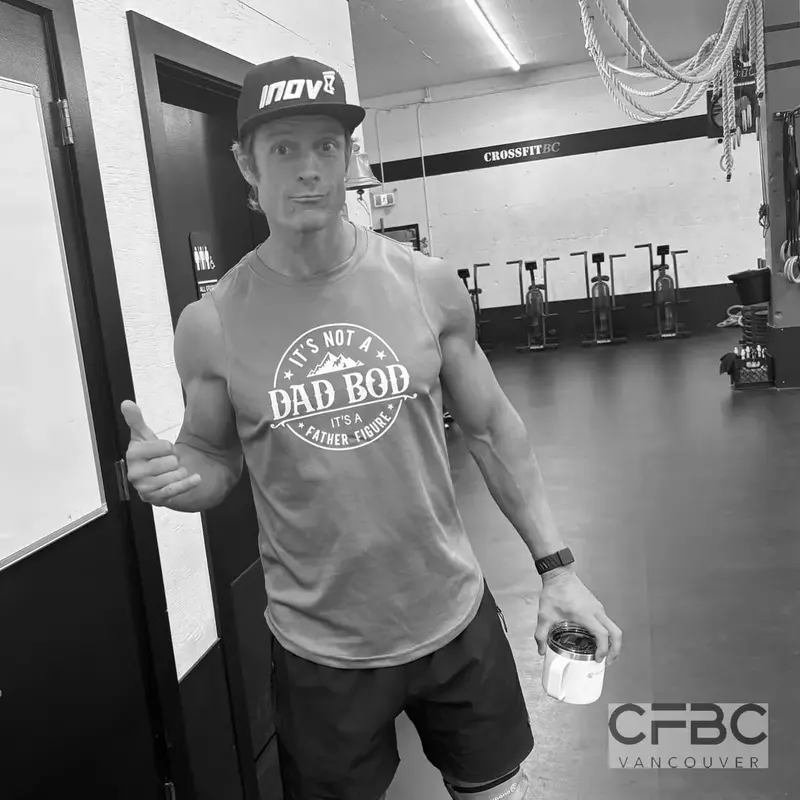
I do not need your front rack to look like a poster. It has to be comfortable and keep the bar where you can drive it. Adjust the grip first, then train the range.
What else should I know?
Should I use a full grip or fingertips?
Either works. Many lifters rack on the fingertips with a slightly wider grip. Use whatever keeps the elbows up without wrist pain.
Can I still clean while I work on this?
Yes, at lighter loads, or try a cross-arm rack for front squats while the position improves.
Is the front rack check part of my Range Screen score?
Not yet. It is a draft check awaiting coach confirmation, so it does not count toward your score.
When should I see a physio?
Stop at pain. Pain, numbness or no change after six weeks is a reason to see a physio for individual assessment.
What does the research say?
- Ludewig and Braman (2011). Shoulder impingement: biomechanical considerations in rehabilitation.
- Afonso et al. (2021). Strength training versus stretching for improving range of motion: a systematic review and meta-analysis.
- Skopal, Drinkwater and Behm (2024). Application of mobility training methods in sporting populations: a systematic review of performance adaptations.