Move with control
CrossFit Open mobility: prepare your positions
The CrossFit Open tends to test overhead, squat and hinge positions under fatigue. Check those positions before the season, train the weakest one and use a short warm-up that moves through each range before you start a workout. Scale any movement you cannot hold without pain.
By Dai Manuel (Coach Moose) · Last reviewed
How can I test myself?
Overhead squat
Broomstick overhead, feet in your wall ball stance, three slow reps.
Pass standard: Hip crease below the knee, heels down, stick stays over the middle of your feet.
Which movements can it limit?
Overhead under fatigue
Overhead positions get harder as you tire. A stable lockout at light load gives you more room under fatigue.
Squat depth in thrusters and wall balls
Missed reps often come from depth. Practise hitting depth with control.
Hinge in deadlifts and cleans
High-rep hinging punishes a rounded back. Train a strong position first.
How can I work on it?
End-range strength
Wall slide with lift-off
Stand with your back to a wall, slide your arms up, then lift your hands an inch off the wall and hold.
- Regression
- Stand a step away from the wall.
- Progression
- Add a longer hold at the top.
- Sets and reps
- 2 sets of 6 reps.
- Frequency
- Three days a week.
Loaded position
Overhead squat with dowel
Hold a dowel overhead and squat slowly to a comfortable depth.
- Regression
- Squat to a box.
- Progression
- Add a pause at the bottom.
- Sets and reps
- 2 sets of 6 reps.
- Frequency
- Before training.
Soft tissue / passive
Upper back foam roll
Roll the upper back gently with hands behind your head, then do a few wall slides to use the range.
- Regression
- Keep the range small.
- Progression
- Add slow breathing at the tightest spot.
- Sets and reps
- 60 seconds rolling, then 8 slides.
- Frequency
- Before training.
When should I retest?
Retest every deload week, using the same setup. Look for a more comfortable position, steadier control and changes in measured range. Compare like with like, not a warmed-up attempt with a cold one.
When should I see a physio?
Stop if a test or drill causes pain. Pain, numbness, or no change after six weeks is a reason to see a physio. This screen is not a diagnosis.
What would Coach Moose say?
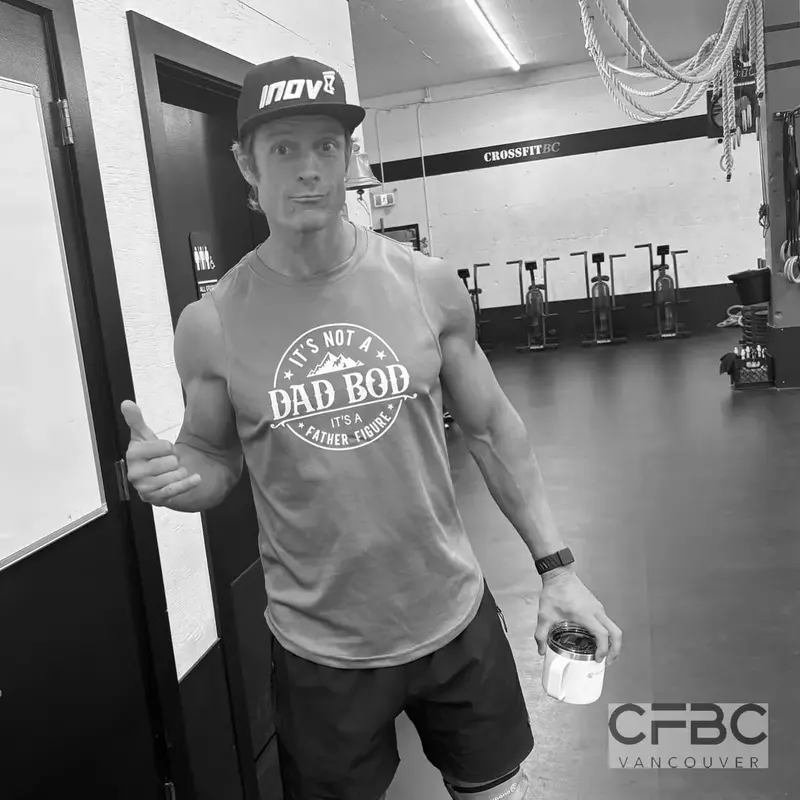
The Open is about showing up and doing your best on the day. I would take a good warm-up and honest scaling over forcing a position you do not own yet.
What else should I know?
When should I start working on mobility for the Open?
A few weeks out gives you time to see change. Start with the Range Screen to find your priority.
Should I stretch before an Open workout?
Use a dynamic warm-up through the positions in the workout. Keep long static holds for later.
Can I scale if a movement hurts?
Yes. Scaled divisions exist for exactly this. Pain is a reason to stop and adjust.
When should I see a physio?
Stop at pain. Pain, numbness or no change after six weeks is a reason to see a physio for individual assessment.
What does the research say?
- Skopal, Drinkwater and Behm (2024). Application of mobility training methods in sporting populations: a systematic review of performance adaptations.
- Feito, Burrows and Tabb (2018). A 4-year analysis of the incidence of injuries among CrossFit-trained participants.
- Behm, Blazevich, Kay and McHugh (2016). Acute effects of muscle stretching on physical performance, range of motion, and injury incidence in healthy active individuals: a systematic review.